

According to research, producing electronic devices generates around 580 million metric tonnes of carbon emissions annually, with manufacturing being the largest contributor.
Although most people think it’s the hours spent browsing that rack up the damage, that’s not how it works. Rather, extracting raw materials and assembling components demands enormous energy before your laptop even leaves the factory.
In this article, we’ll show you where the carbon footprint concentrates across a computer’s life cycle. You’ll also learn why production creates most harm, everything that happens at the end of a computer’s life, and how disposal affects the planet.
Let’s find out more about the stages of a computer’s lifetime.
Manufacturing’s Hidden Carbon Footprint
Manufacturing a single computer generates between 250 and 400 kg of carbon emissions before reaching your desk.
Think about it this way: greenhouse gas emissions from making your laptop exceed what most people produce driving for weeks. In fact, the overall carbon footprint concentrates heavily here, accounting for most global greenhouse gas emissions from tech.
Take a look at where these emissions come from.
Raw Material Extraction and Processing
Mining rare earth metals requires massive energy input and destroys habitats across continents. For instance, extracting raw materials like tantalum involves mining activities that strip forests and contaminate water.
What’s more, processing silicon, copper, and gold generates toxic waste that seeps into local supplies. To give you an idea, a single computer needs over 240 kilograms of fossil fuels just for extraction.

Component Manufacturing and Assembly
Semiconductor plants consume millions of litres of water daily to produce microchips. In fact, manufacturing one chip releases the same carbon emissions as driving a car several kilometres.
Not to mention, device production in Asian assembly lines accounts for the majority of a computer’s total carbon footprint. Along with that, water consumption in these facilities can reach staggering levels just to keep production lines running.
It doesn’t end there. Producing a computer also involves high-energy consumption because materials have to be heated to extreme temperatures.
Transportation and Distribution Networks
After the manufacturing stage comes distribution, and shipping components from multiple countries adds emissions straight away. The supply chain moves various parts between continents, each leg adding to carbon dioxide emissions.
By the end, even a typical laptop travels over 50,000 kilometres during manufacturing and distribution. And if we consider different types of shipping, air transport produces 50 times more emissions than ocean shipping.
Computer Life Cycle Analysis: Breaking Down Each Stage
Ever wondered which part of your computer’s life cycle causes the most harm to the environment? Our investigation showed that the manufacturing stage leaves the most environmental footprint, and the pollution is extremely uneven across stages.
Here’s how energy consumption and environmental impact occur during a computer’s life cycle:
- Manufacturing Stage: The manufacturing and shipping stage accounts for around 85% of a computer’s total environmental impact, far more than its use and disposal stages combined. This includes everything from extraction through assembly.
- Daily Usage: After manufacture, daily usage contributes only around 15%, depending on electricity sources and how long you keep the device. In fact, running your computer for years still produces fewer emissions than making it.
- End-Of-Life Disposal: The end of the cycle represents just a fraction of the impact, though improper recycling multiplies this substantially. Especially, when e-waste ends up in landfills instead of proper facilities, toxic materials leak out and contaminate surrounding areas.
- Extended Lifespan Benefits: Keeping your computer for just one extra year reduces overall environmental impact by 23.5%. Plus, energy consumption during use varies based on regional power grids and whether renewable sources supply the electricity.
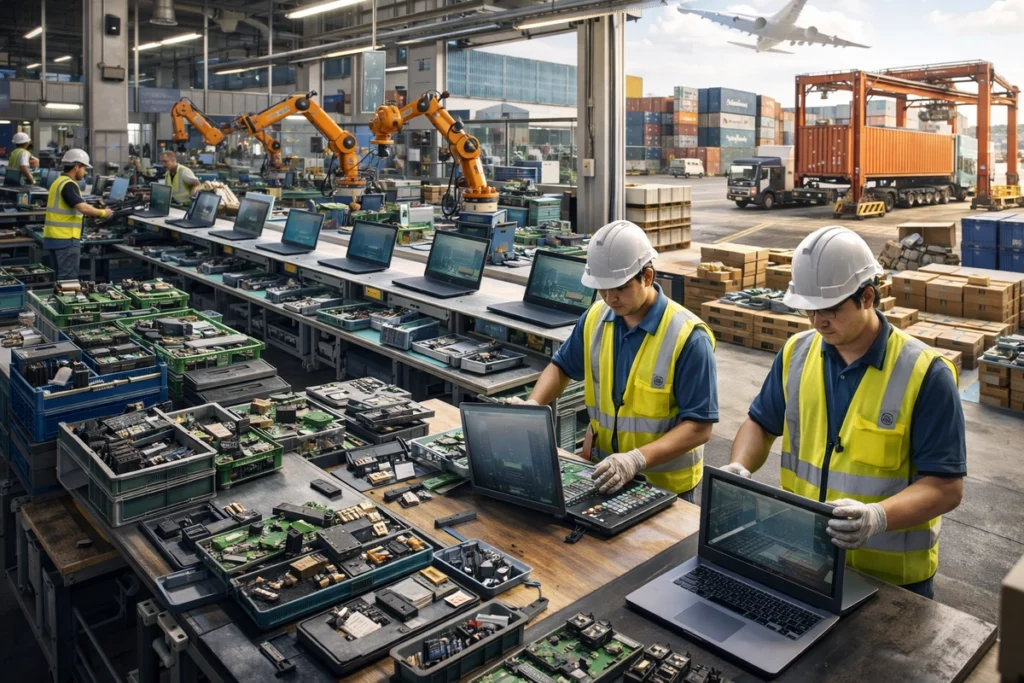
Ultimately, the largest environmental hit occurs before you ever turn the device on. As a solution, circular economy strategies that focus on material recovery can greatly reduce disposal impacts.
Data Centres vs Personal Devices: Comparing Energy Consumption
Data centres that handle cloud computing and streaming consume 1% of global electricity annually. These massive facilities powering digital services run constantly, unlike your personal machine, which sits idle most of the day.
The good news is that daily energy use pales in comparison to the carbon footprint created during manufacturing. In fact, charging your laptop daily for a year uses roughly the same energy as producing one computer chip. Your computer approximately uses 50-250 watts, whilst data centres powering online platforms use millions of watts continuously.
To minimise energy consumption, it’s more effective to keep an eye on the real energy hogs. For instance, artificial intelligence training models in data centres can emit more carbon than five cars over their lifetimes.
Plus, regional electricity sources affect how much pollution a computer creates during use. Especially, places that rely on renewable energy have much lower operating carbon emissions than areas that depend on coal.
Bottom line: The energy consumption gap between personal computing and data facilities shows where infrastructure emissions truly concentrate.
The Overlooked Middle Years After Manufacturing
Most computers get replaced after just 3-4 years, yet they could easily function for 7-10 years with proper care. This middle period between purchase and disposal gets ignored in most discussions, but it’s where you can truly reduce environmental impact through your choices.
Let’s look at what keeps devices running longer.
Repair, Upgrades, and Extended Lifespans
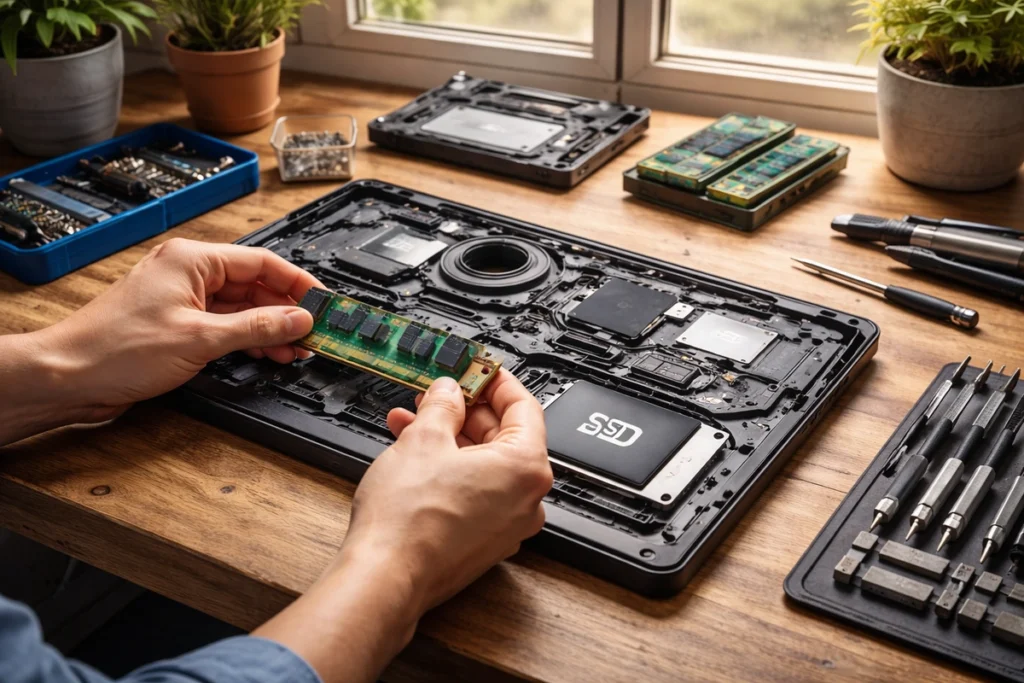
Simple upgrades extend usability without the massive environmental cost of new device production. If you don’t know where to start, replacing a failing hard drive or adding memory produces considerably less emissions than buying new computers.
Along with that, right-to-repair legislation could prevent millions of tonnes of electronic waste from entering landfills annually.
Unfortunately, manufacturers often design products with limited upgrade options, forcing consumers toward premature replacement. This pushes perfectly functional IT equipment into the waste stream far too early.
Software Updates and Digital Obsolescence
Operating system updates sometimes require newer hardware, and that pushes perfectly functional computers into early retirement. These requirements often have little to do with computing needs and more with driving sales of new devices.
Similar to this concept, planned obsolescence through software means digital devices become “unusable” whilst physically remaining perfectly intact (something most people overlook until it’s too late).
And yes, the tech industry designs these limitations deliberately. However, keeping older operating systems functional could extend computer lifespans by three to five additional years and reduce the environmental impact of tech products.
Electronic Waste and Circular Economy
Did you know that only 17.4% of global e-waste gets properly recycled, with the rest ending in landfills or informal recycling operations (we’ve all been there with old laptops sitting in cupboards).
Computers contain toxic materials like mercury, lead, and cadmium that leach into soil and groundwater supplies. And these hazardous materials don’t just disappear when dumped.
What’s more, informal e-waste recycling in developing countries exposes workers to dangerous, toxic substances without proper safety equipment. This environmental degradation from improper disposal affects communities for generations.
On the contrary, circular economy approaches could recover most of the valuable materials from discarded computers through proper recycling methods. It’s because circular computing models focus on keeping components in use longer through e-waste management systems.
Fun Fact: One tonne of discarded computers contains more gold than 17 tonnes of gold ore mined from the earth.
Retrieve Your Digital Devices and Reduce E-Waste
The environmental impact concentrates in those early stages when raw materials are extracted and components assembled. This changes how we should think about technology consumption in our digital world.
At the end of the day, keeping devices longer is more effective than worrying about daily energy use. Additionally, you can support right-to-repair laws, choose refurbished options when possible, and resist upgrading unless absolutely necessary. These sustainable practices reduce demand for new production.
At Chaire-Cycle de Vie, we’ve spent over two decades researching the complete life cycle of technology to help people make informed choices. Visit our website to learn more sustainable solutions for reducing your digital environmental footprint and creating a healthier planet for future generations.