

Every year, the world produces around 62 million tonnes of electronic waste, which is enough to fill about 1.5 million trucks. Hidden inside that mountain of discarded electronics are millions of laptops that were replaced long before they stopped working.
Sadly, many people don’t realise that the highest environmental cost of a laptop often happens long before it becomes e-waste. Manufacturing a single device generates more carbon emissions than years of daily use, and the process consumes rare materials extracted from ecosystems across the globe.
This article explores the environmental impact of computers, showing exactly where those emissions come from. You’ll learn how manufacturing, daily energy use, and disposal each contribute to the overall footprint.
Let’s get started.
A Laptop’s Environmental Impact Across Its Lifecycle
A laptop’s carbon footprint comes from three stages: manufacturing, daily use, and disposal. Of these, manufacturing dominates the total impact because producing processors, screens, and batteries requires energy-intensive processes and rare earth extraction. And most of this environmental cost happens in factories and mines thousands of miles away.
So, by the time a laptop reaches your desk, it’s already responsible for more carbon emissions than several years of daily use will generate. Research from the University of Oxford found that around 85% of a laptop’s greenhouse gas emissions come from manufacturing and shipping, with just 15% from electricity consumption during use.
Disposal accounts for the remaining portion of the carbon footprint. But improper handling at this stage can release toxins and waste valuable materials that could otherwise be recovered through proper recycling.
Electronic Waste Manufacturing: Where Most Environmental Impact Happens
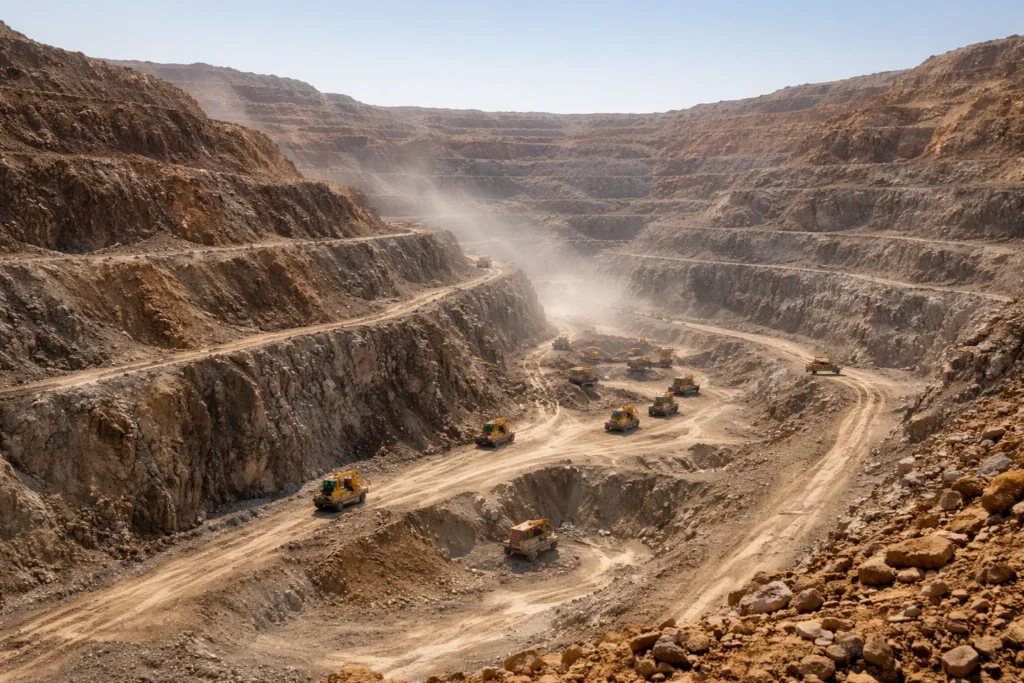
Building a laptop pulls together materials and processes from across the planet. The three areas below show where most of the environmental cost comes from during production.
Rare Earth Mining and Material Extraction
Laptops require rare earth elements like cobalt, lithium, and palladium for processors and batteries. Extracting these often involves destructive mining practices that damage ecosystems and disrupt nearby communities.
In many regions across Africa and South America, workers face unsafe conditions and extremely low pay while extracting the materials that power modern electronics.
Water Consumption in Semiconductor Production
It takes massive amounts of water to manufacture laptop components, especially processors. Chip fabrication plants consume millions of litres of ultra-pure water daily, and a single facility can use as much water as a small city each year.
The process also generates toxic chemical waste that requires careful treatment before disposal.
Global Supply Chain Emissions
Most laptops involve components manufactured across multiple continents before final assembly. Raw materials from Africa might travel to Asia for processing, then to China for assembly, with the finished devices shipped worldwide for distribution.
Each transport stage adds carbon emissions, which makes the supply chain a hidden contributor to a laptop’s total footprint.
Energy Use During Daily Operation
Earlier research from Oxford shows that once a laptop is in use, energy consumption becomes the second-largest source of its environmental impact after manufacturing. That said, laptops are still much more energy-efficient than desktops.
Laptops typically consume 30–70 watts during regular use, while desktops paired with a monitor can draw 150–300 watts. But if you add a second screen to your laptop setup, that efficiency advantage starts to disappear. The extra monitor alone can add up to 20-40 watts to bring your total energy consumption roughly halfway to desktop levels.
Power-saving features can help reduce this further. Sleep mode and screen dimming cut energy use when you’re not actively working, and shutting down your laptop completely at night saves even more electricity.
Still, these savings are small compared with the carbon emissions from manufacturing. That’s why extending the life of your laptop has a much bigger impact.
How Much Carbon Does Your Laptop Actually Produce?
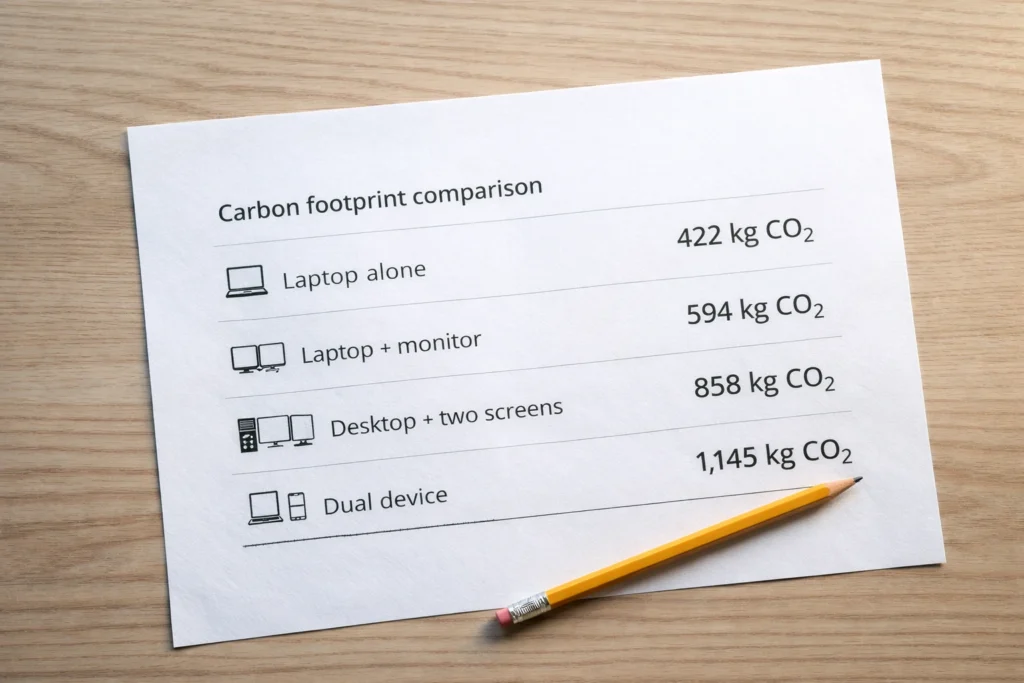
A standard laptop used over six years produces approximately 691 kilograms of CO₂-equivalent emissions, according to the same Oxford research. Adding an external monitor at home pushes that figure to 928 kg, which is a 49% increase.
For comparison, that’s roughly equivalent to driving 3,500 kilometres in a petrol car.
The research also shows how different setups affect the total footprint. A desktop with two screens generates about 903 kg over the same period, while a laptop with monitors both at the office and at home reaches 928 kg. So, if you run both a desktop and a laptop, the combined emissions will climb to over 1,000 kg (that’s a lot).
These comparisons highlight how quickly device choices add up. A single laptop on its own has the smallest footprint, but adding monitors or running multiple devices quickly erases that advantage.
The Environmental Cost of Replacing Laptops Every Few Years
Laptops often get replaced after just three or four years, even when they’re still functional. Sometimes it’s because the battery no longer holds a charge, or the device simply feels slow. Other times, newer models simply look more appealing.
Whatever the reason, replacing a device too early means the manufacturing emissions from the old laptop haven’t been spread across enough years of use.
The environmental impact compounds with every replacement. Each time you buy a new laptop, you’re triggering that same 70–80% manufacturing footprint all over again. And as a result, many old laptops end up sitting in drawers or storage, while others are thrown away improperly.
When replacement gaps are short, this cycle repeats more often. A laptop replaced every three years creates more total emissions than one kept for six, simply because you’re paying the manufacturing penalty twice as often.
E-Waste Generation and Disposal Problems
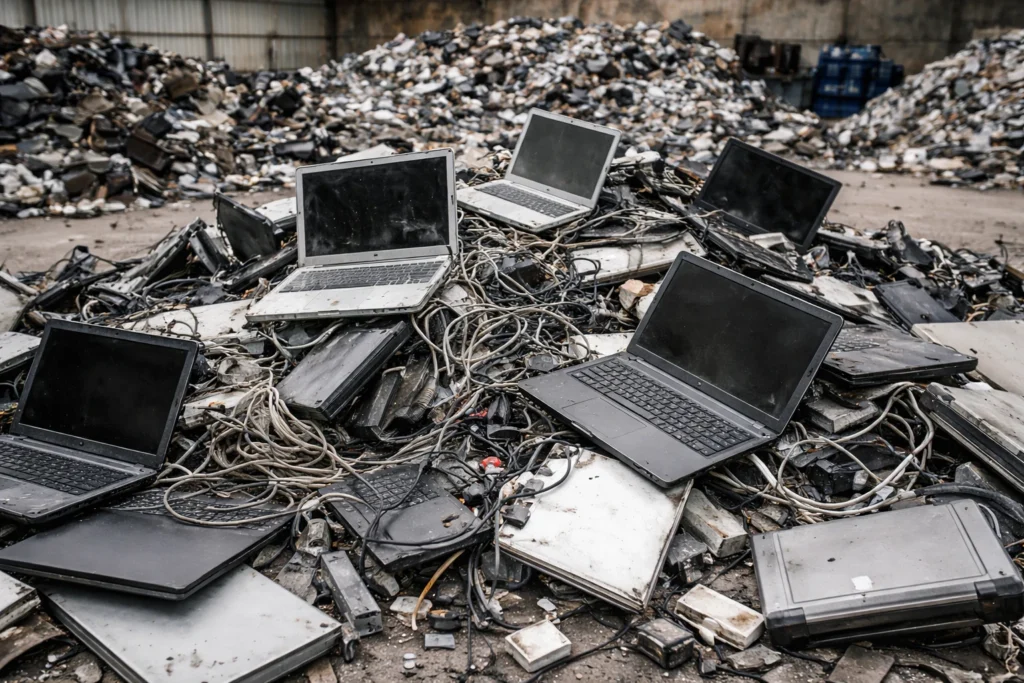
When laptops reach the end of their useful life, most are not recycled properly. In 2022 (the most recent year with available data), less than one quarter (about 22.3%) of the year’s e-waste was documented as collected and recycled through certified programmes. The rest ended up in landfills, informal recycling operations, or sitting forgotten in storage.
When electronics aren’t recycled properly, they cause both environmental and health problems. Electronic waste contains toxic substances like lead and mercury, which can leak into soil and water used by the nearby communities if not handled safely.
Low recycling rates also mean valuable materials are lost. Laptops contain recoverable metals like gold, copper, and rare earth elements that could be extracted through proper computer recycling. Better e-waste management could recover these materials and reduce the need for new mining.
Extend Your Laptop’s Life to Reduce Environmental Impact
You don’t have to make drastic changes to reduce your laptop’s environmental impact. Small steps like keeping your laptop for an extra year or two can make a bigger difference than any power-saving feature. It spreads the manufacturing emissions across more years of use, lowering the annual carbon cost.
Regular maintenance helps as well. Simple habits like keeping your battery between 20–80% charge, cleaning vents to prevent overheating, and updating software can add years to your device.
If performance slows, upgrading RAM or replacing the battery is often cheaper and more sustainable than buying new. And when you do eventually replace your laptop, choose certified recycling programmes that recover valuable materials and prevent e-waste.
If you’d like to learn more about making sustainable technology choices, visit Chaire-Cycledevie for research and resources on responsible device use and recycling.