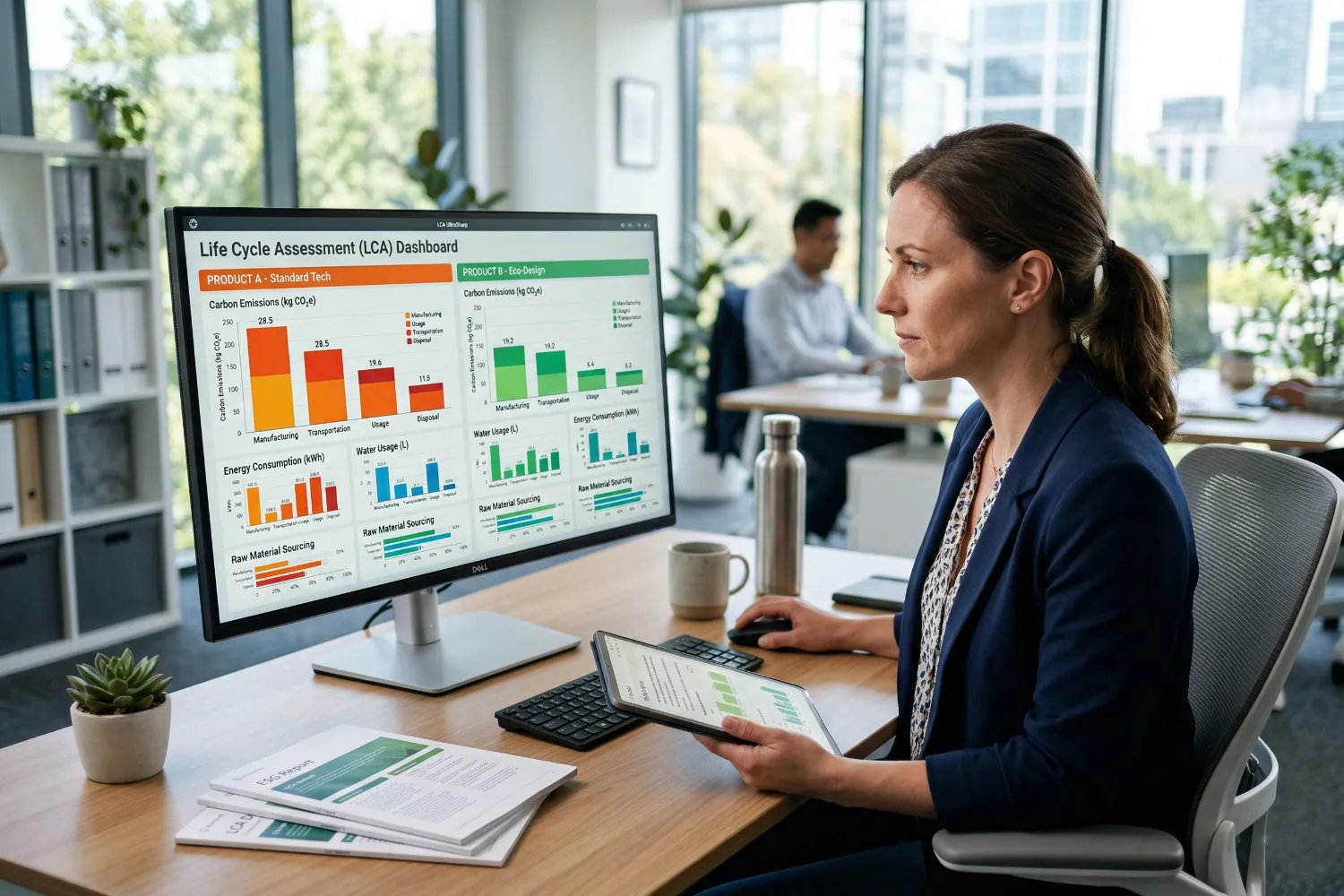
Life cycle assessment (LCA) data provides organisations with insight into the true environmental costs of products. It helps organisations make well-informed technology choices before purchase. The data includes carbon emissions, energy use, and raw material consumption from manufacturing through to disposal.
Here at Chaire-Cycledevie, we’ve spent over two decades studying the life cycle of technology and its environmental consequences. We understand how this data translates into better purchasing choices.
In this guide, we’ll discuss how organisations apply life cycle data to technology decisions. We’ll also explain what LCA measures and the benefits it brings to procurement teams.
Read on to find out how to make your next technology purchase count.
How Do Organisations Use Life Cycle Data to Choose Technology?

Organisations use life cycle data by requesting environmental product declarations, comparing vendor carbon footprints, and adding sustainability criteria to procurement. Life cycle assessment (LCA) data reveals the environmental impact of a product across manufacturing, daily use, and disposal stages.
When procurement teams have access to this information, they can weigh sustainability alongside cost and performance.
Here are six ways organisations apply life cycle data to technology purchasing decisions:
- Requesting Environmental Product Declarations: Ask vendors for verified LCA data showing carbon footprint and energy use. If a supplier can’t provide this information, it often signals a gap in their environmental reporting practices.
- Comparing Cloud Services vs On-Premise Hardware: The environmental impact of running your own servers compared to using cloud providers depends on a few key factors. For example, the source of energy used by data centres, how heavily you use the systems, and how long the equipment lasts all influence the overall outcome.
- Evaluating Scope 3 Supply Chain Emissions: Purchased technology accounts for a surprisingly large share of indirect emissions for many organisations. LCA data helps pinpoint which products deserve closer scrutiny.
- Applying ISO 14040 Standards: These internationally recognised frameworks keep comparisons fair and consistent. Without a shared methodology, vendor claims become difficult to verify or trust.
- Assessing End-of-Life Recycling Potential: Some products are designed for easy disassembly and material recovery, while others end up in landfills. That’s why organisations should consider circular economy principles for every procurement decision.
- Prioritising Energy-Efficient Options: A device that uses less power during operation lowers costs and cuts emissions over time. And energy efficiency is one of the most practical ways you can improve sustainability.
These steps make sustainability reporting more accurate and easier to manage across frameworks.
What Does Life Cycle Assessment Measure in Technology?
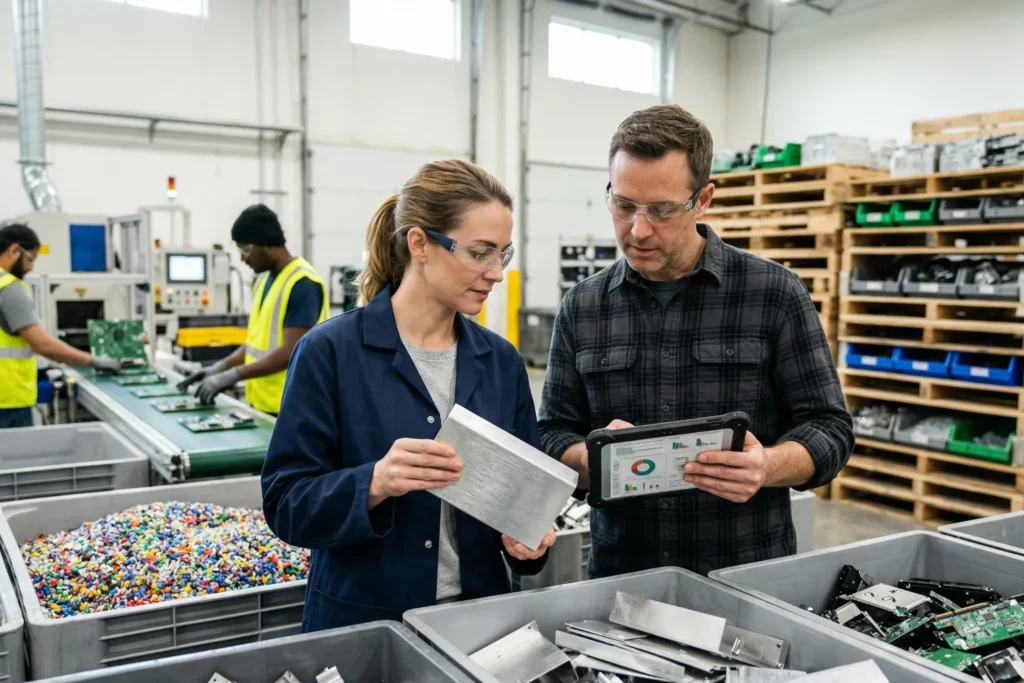
As we already mentioned, life cycle assessment measures carbon emissions, energy use, and raw material depletion across a product’s full lifespan, including resource extraction and final disposal. These metrics help procurement teams identify where technology has the greatest environmental effect.
Let’s get into more detail about LCA metrics.
Carbon Footprint and Global Warming Potential
The average laptop generates around 331 kg of CO2 equivalent across its full lifecycle, and manufacturing alone is responsible for most of this impact at around 75% to 85%. For clarity, carbon footprint refers to the total greenhouse gas emissions linked to a product.
Meanwhile, global warming potential (GWP) converts different greenhouse gases into comparable carbon dioxide (CO2) equivalents. Manufacturing processes release gases like methane and nitrous oxide, apart from CO2. To simplify comparison, GWP combines these gases into a single measure.
And for most electronics, the use phase contributes considerably to carbon impact alongside manufacturing. For example, a computer running for four years can generate emissions roughly equal to those produced during its production.
Sourcing insight: Supplier transparency on component sourcing often signals more reliable environmental data overall.
Energy Consumption Across the Life Cycle
Tracking energy consumption reveals where your organisation can cut costs and emissions at the same time. Energy use occurs during three main stages: manufacturing, operation, and end-of-life processing.
In this context, cloud services shift energy use away from your organisation to external data centres. The energy demand still exists, but you rely on providers who may manage it more efficiently or use cleaner energy sources.
Frankly, energy-efficient technology reduces both environmental impact and operating costs. And that’s how you pay less for electricity and produce fewer emissions at the same time.
Raw Material Use and Resource Depletion
Did you know that a single smartphone contains over 57 different elements? Technology production requires metals like cobalt, lithium, and rare earth minerals, and many of them are sourced from environmentally sensitive regions (some of those materials have no easy substitutes even today).
Organisations as well as individuals can use LCA data to find which of these materials cause the most environmental damage during extraction. This action connects directly to procurement decisions, which will help people avoid products with problematic sourcing.
The good news is that most manufacturers now prioritise recycled content and materials with lower resource depletion. That means devices built with recovered aluminium or recycled plastics carry a smaller extraction footprint from the start.
What Are the Benefits of Life Cycle Assessment in Procurement?

LCA benefits procurement by providing verified data for supplier comparisons, Scope 3 reporting, and long-term cost savings. When organisations embed LCA into their purchasing decisions, they gain a clear way to measure progress toward sustainability goals.
Below are some of the key benefits of using life cycle assessment in technology procurement:
- Meeting Scope 3 Reporting Requirements: Purchased goods and services fall under Scope 3 of the Greenhouse Gas (GHG) Protocol. Without clear LCA data, organisations rely on estimates instead of accurate reporting when tracking these emissions for ESG compliance.
- Avoiding Greenwashing Claims: Vendors often claim their products are sustainable, but these claims can be hard to verify. Environmental product declarations backed by LCA provide third-party verified figures, so you can rely on evidence rather than marketing language.
- Reducing Long-Term Operational Costs: Energy-efficient technology costs less to run over its lifespan. That upfront investment in better devices often pays for itself through lower electricity bills within a few years.
- Supporting Circular Economy Goals: Some products are built to be repaired, refurbished, or recycled, while others head straight to landfill. LCA data helps you tell the difference before you buy (plays a role in how long you can use the device).
In short, these factors support a more grounded and transparent procurement approach.
Your Next Steps for Greener Technology Procurement
Life cycle assessment helps your organisation understand the environmental impact of technology before making a purchase. The method provides data on carbon emissions, energy use, and resource consumption, so organisations can make clearer and more informed sustainability decisions.
Start your assessment by asking your current technology suppliers for environmental product declarations. If they can’t provide this information, the gap gives you a useful signal to act on. You can then include sustainability criteria in your procurement processes and track your progress over time.
If you want to learn more about sustainable technology choices, read our other guides on how to reduce your organisation’s environmental footprint.