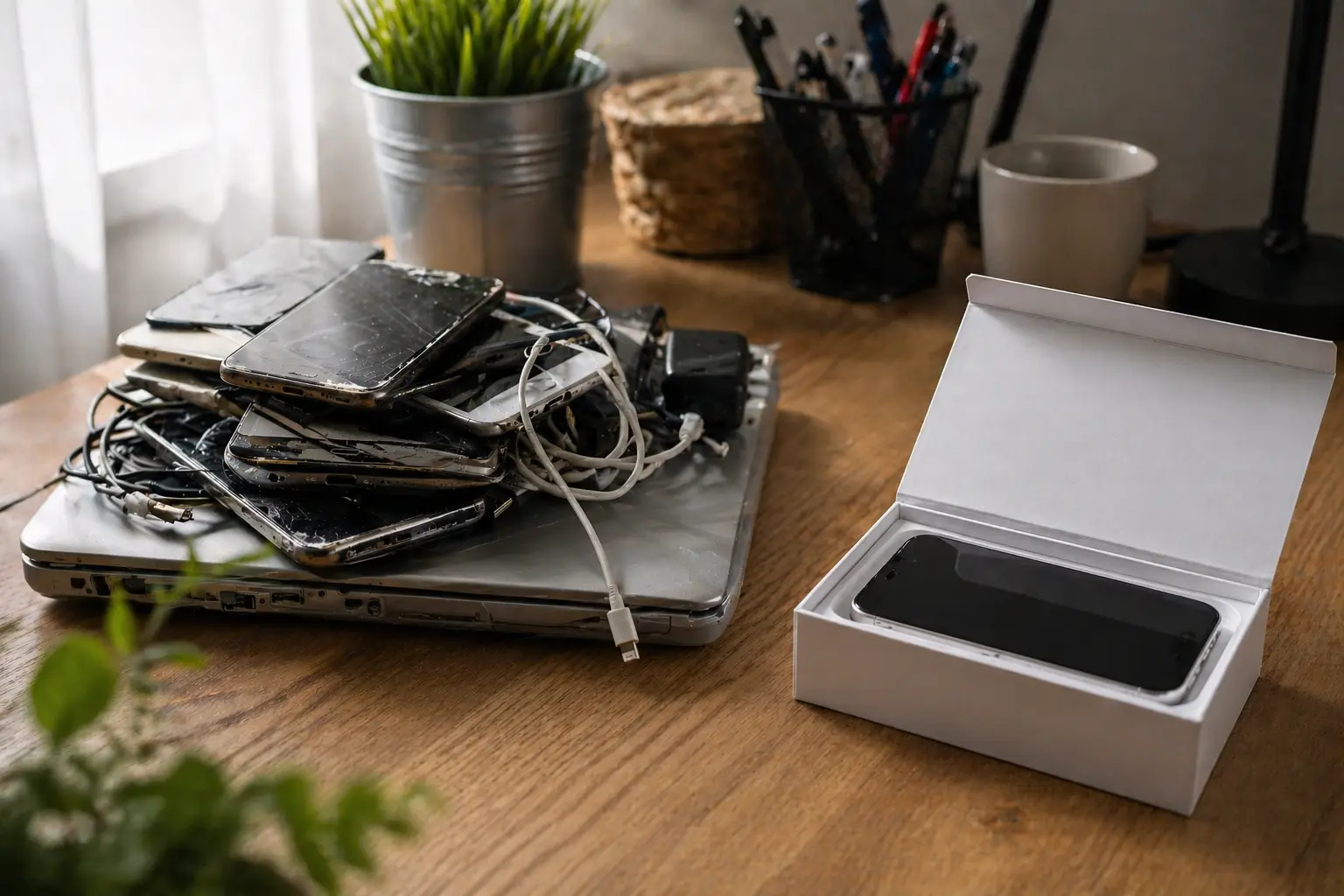
You’ve probably heard that e-waste is a growing problem. But once you start looking at the numbers, you’ll realise how bad it actually is. In fact, Global electronic waste hit 62 million tonnes in 2022, and it’s still rising.
Our team at Chaire-Cycledevie has been researching the life cycle of electronic equipment for over twenty years, so we’ve watched these numbers climb firsthand. This article breaks down where all that e-waste is coming from.
We’ll also look at why recycling rates remain so low, and what the consequences look like for communities in developing countries.
What Is Driving E-Waste Growth Around the World

E-waste is growing because we buy more electronic equipment, replace it faster, and rarely bother fixing it. Three main factors are pushing global e-waste in this direction.
- Shorter Replacement Cycles: Most electronic devices now last around two to three years before they’re swapped out. Manufacturers release updated models so frequently that older devices feel outdated long before they stop working, and that drives e-waste generation worldwide at a pace few predicted.
- Expanding Access to Technology: It sounds like a good thing, and it is, but it comes with a cost. Affordable mobile phones and laptops have brought millions of new users online across every region. Once those devices reach the end of their life, they add to the growing volume of e-waste generated each year.
- Products Built to Replace, Not Repair: Most electrical and electronic equipment isn’t designed to be taken apart or fixed (and most manufacturers would rather you didn’t think about that). If a screen cracks or a battery dies, buying a new device is often cheaper than getting it repaired. That alone keeps e-waste recycling rates low and waste volumes high.
The combination of all three means e-waste collection systems are under more pressure than ever before.
Global E-Waste Statistics Show Rise of Electronic Waste
Now, let’s put some numbers to it. Global e-waste statistics paint a picture that’s hard to ignore, and the trend line only points in one direction: upwards.
| Year | E-Waste Generated (Million Tonnes) |
| 2010 | 34 million tonnes |
| 2019 | 53.6 million tonnes |
| 2020 | 62 million tonnes |
| 2030 (projected) | 82 million tonnes |
That’s not a slow creep either. What’s more, per capita e-waste generation has climbed, too, meaning each person is now responsible for roughly 7.8 kilograms of electronic waste per year. If consumption patterns don’t shift, that number will keep rising well into the next decade.
And the e-waste problem isn’t only about total volume. The speed of this increase is outpacing every recycling effort currently in place, which raises serious questions about how global e-waste will be handled going forward.
What the Global E-Waste Monitor Reveals About E-Waste Generation
Once you see the full picture, the scale of this problem becomes much harder to dismiss. The Global E-Waste Monitor 2024, published by the International Telecommunication Union and the United Nations Institute for Training and Research, is the most detailed snapshot of global e-waste we have right now. And its findings are sobering.
We’ve been following these reports since they first started publishing them, and the gap between e-waste generation and documented e-waste recycling has only widened.
As we mentioned before, the world produced 62 million tonnes of e-waste in 2022 alone. But formal channels only properly collected and recycled 22.3% of it through environmentally sound management processes. Let that sink in for a moment. That means nearly 78% of all e-waste generated went untracked, with no record of where it ended up or how it was processed.
From screens and temperature exchange equipment to mobile phones and other electronic equipment, five product categories make up the bulk of the waste stream. If you’ve ever wondered what actually happens to those devices once you’re done with them, the answer for most of the world’s e-waste is that nobody really knows.
Why Documented E-Waste Recycling Rates Remain So Low
Proper e-waste recycling recovers valuable materials and protects human health, yet most countries still can’t make it happen at scale. The barriers come down to three connected issues.
Weak Legislation and Enforcement
In our experience, the countries that do have e-waste legislation on paper often lack the funding or enforcement to back it up.
Without clear rules separating e-waste from general hazardous waste, most discarded electrical and electronic equipment ends up in the same bins as household rubbish.
And if governments don’t strengthen e-waste policy and fund proper recycling infrastructure, the gap between e-waste generated and e-waste actually recycled will only widen.
Informal E-Waste Recycling and Its Risks
Where formal systems fall short, informal e-waste recycling fills the gap. Workers at these operations recover valuable materials like precious metals and rare earth elements by burning circuit boards or using acid baths.
The process does pull out some recoverable natural resources, but it releases hazardous substances and toxic materials into the air and soil at the same time (that’s a health risk no community should have to absorb).
Limited Collection Access
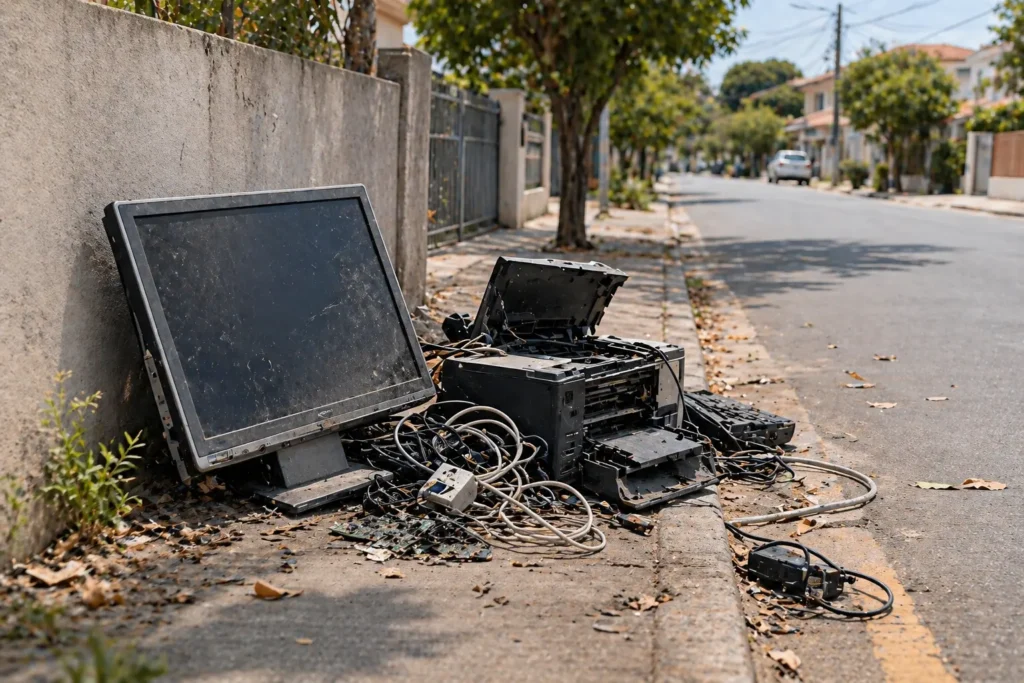
Even in countries with decent e-waste management laws, collection networks are often underfunded and difficult to reach.
In many urban and remote areas, there’s simply no convenient way for people to drop off old electronic devices. So they sit in drawers, or worse, end up in general waste processing streams where no e-waste recycling takes place at all.
Getting these three areas right would change the recycling rate dramatically. But until that happens, documented e-waste recycling will stay well below where it needs to be.
How Poor E-Waste Management Hits Developing Countries Hardest
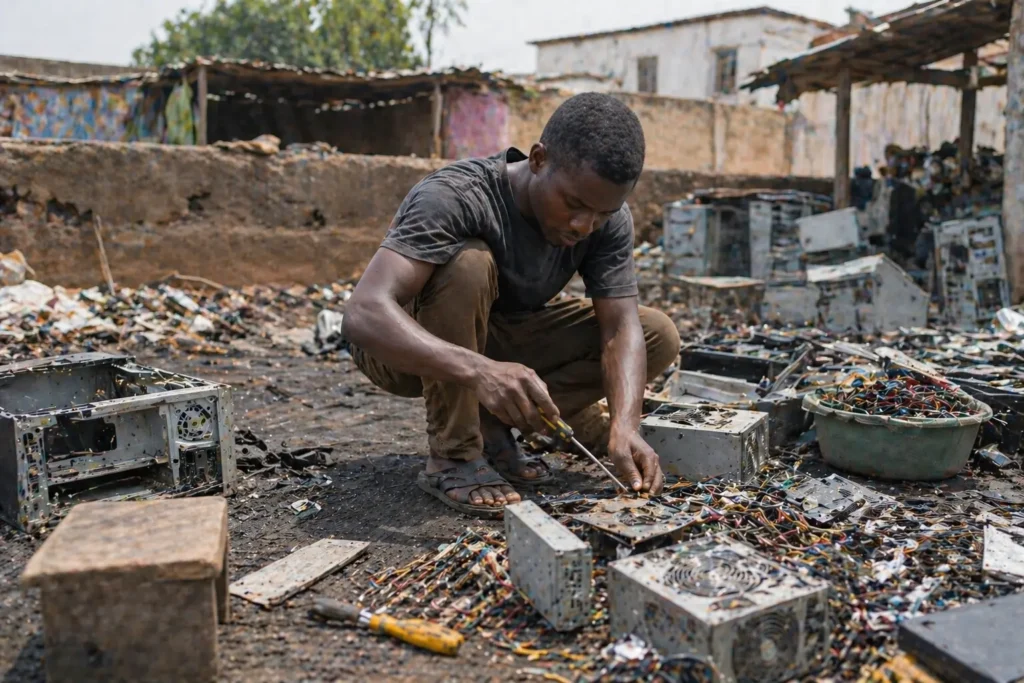
When e-waste isn’t properly managed, a large share of it gets shipped to developing countries. And it’s often labelled as secondhand electronic equipment rather than waste (yes, that loophole is still wide open).
Once it arrives, very little of it goes through any kind of formal e-waste collection or recycling process. And frankly, it’s hard to read about without getting angry.
Workers at informal sites strip apart e-waste by hand, burning cables and using acid to extract precious metals and rare earth elements. According to the World Health Organization, this exposes them to over 1,000 hazardous substances that pose significant risks to human health, with children facing the greatest danger due to their smaller bodies and developing organs.
The damage doesn’t stop at the workers, either. Toxic chemicals from e-waste processing seep into soil and water supplies near dumpsites, increasing pollution risks for surrounding communities. These health and environmental hazard effects can last for years, long after the sites shut down.
If e-waste policy doesn’t catch up to the volume being exported, these communities will continue bearing the cost of the world’s electronic waste problem.
What Better E-Waste Recycling and Global E-Waste Monitoring Could Change
Better e-waste recycling and stronger global e-waste monitoring could slow this crisis significantly. Stronger tracking systems would show exactly where e-waste ends up after it leaves a country, which makes it far harder for exporters to avoid accountability.
Investing in formal recycling also recovers raw materials like recycled metals and rare earth elements, which reduces the demand for environmentally destructive mining of new resources. On top of that, extended producer responsibility policies would push manufacturers to design electronic equipment that’s easier to take apart and recycle at the end of life.
None of this will happen on its own. But governments, manufacturers, and consumers each playing their part would make the global e-waste problem far more manageable than it looks today.
To understand more about how the life cycle of electronics connects to these issues, explore our other resources and see what you can do with the knowledge.