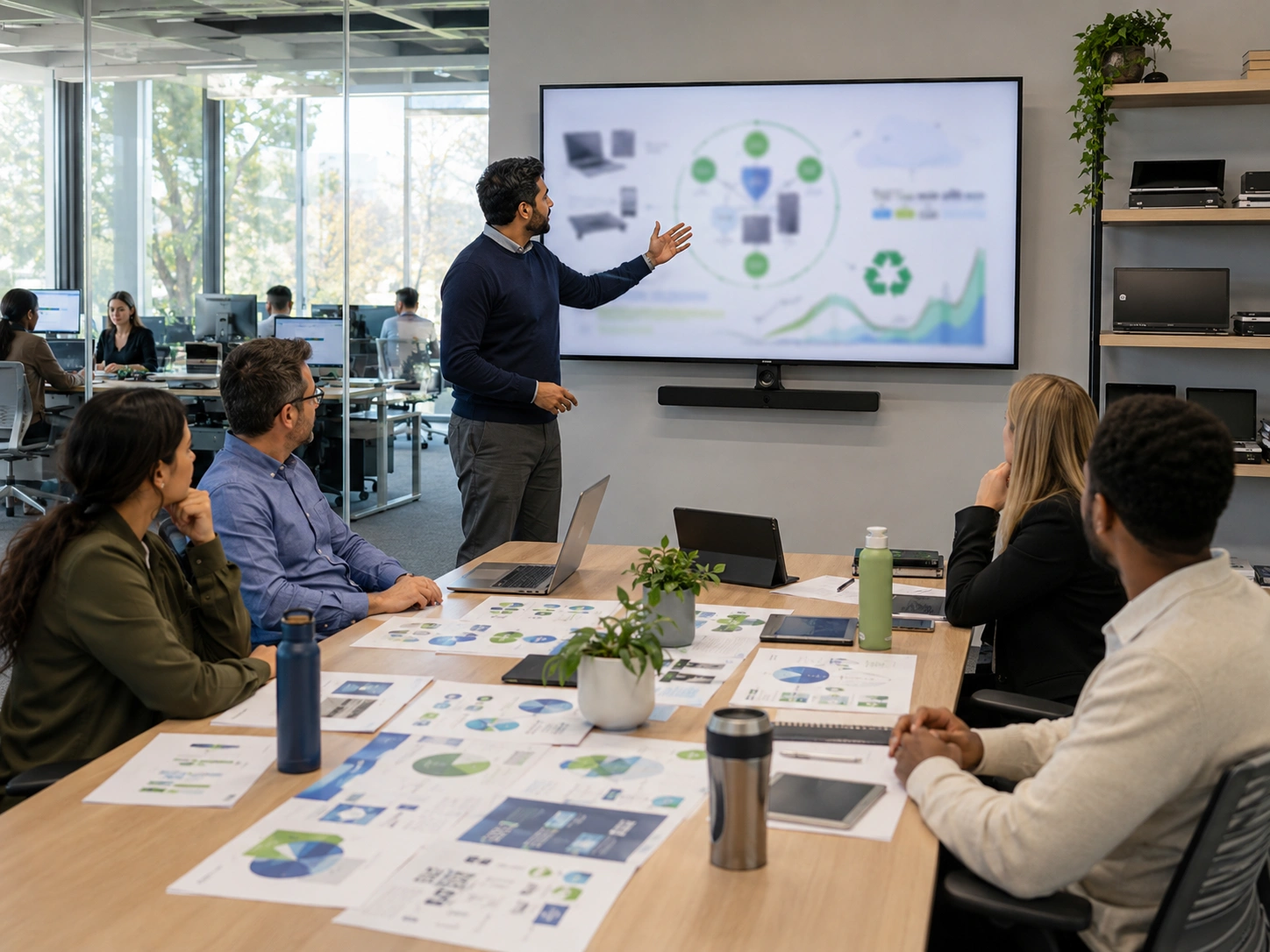
Businesses can build more sustainable IT policies by auditing device usage, setting lifecycle standards, and factoring environmental impact into every procurement decision. Every device in your office carries a real cost. So sustainable IT is now a baseline expectation rather than a bonus.
Several forces have moved it into the mainstream, with climate change leading the way. Climate change is pushing governments and customers to demand more. And businesses that ignore the environmental impact of their technology are falling behind. This regulatory pressure isn’t going away anytime soon.
In this article, we’ll cover green IT, lifecycle management, and how to cut your carbon footprint across IT operations. It’s a practical guide, and built for businesses of any size.
What Is Green IT, and Why Should Your Business Care?
Green IT refers to environmentally responsible practices across your business’s entire technology lifecycle. It covers everything from how you buy devices to how you dispose of them. And for most businesses, it’s an area that’s been overlooked for far too long.
This way, your IT infrastructure has a significant environmental footprint. But reducing it doesn’t require a complete overhaul. It starts with understanding where the greatest impacts come from:
The Environmental Impact of Business IT Infrastructure
Most IT teams track costs and performance. But few track carbon emissions. That gap is where a notable portion of unaccounted environmental impact silently builds up.
For example, manufacturing a single laptop consumes roughly 1200 kg of raw materials (and that’s before you’ve even plugged it in). The supply chain behind every device involves energy-intensive manufacturing processes. It isn’t just about what happens at the end of life.
That said, businesses rarely factor in upstream environmental costs when making IT purchasing decisions. Greenhouse gas emissions from device production alone are consistently underreported across the IT sector.
With that in mind, procurement habits are one of the first things worth examining.
How Energy Consumption and E-Waste Add Up
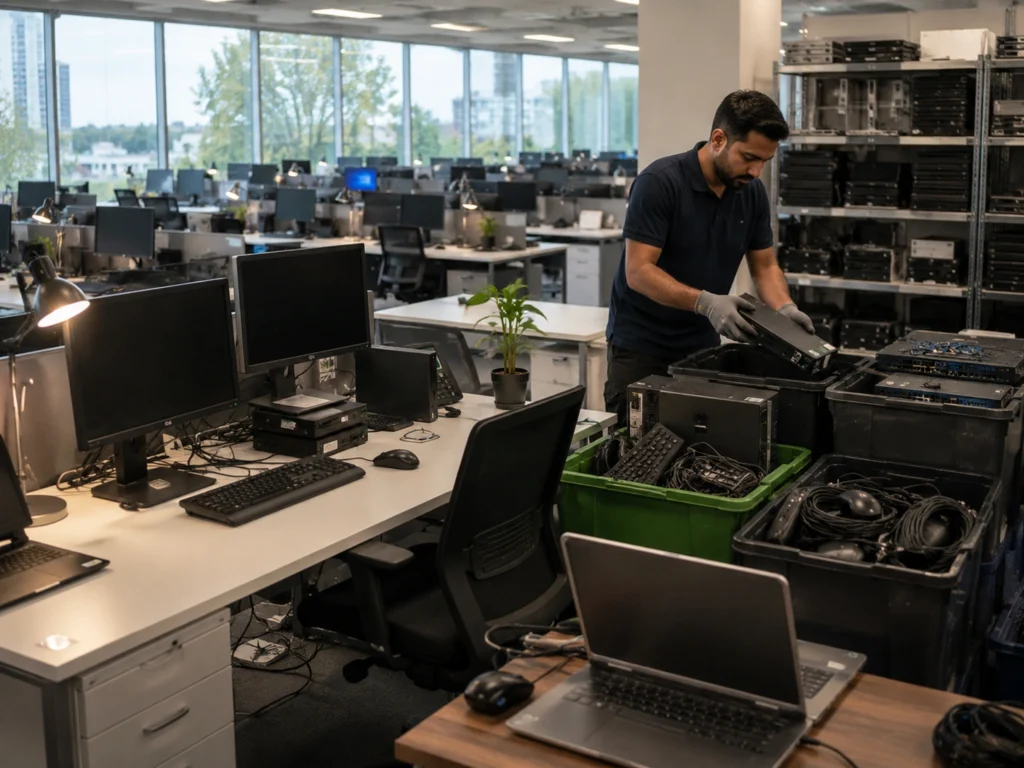
Office devices left on standby waste a surprising amount of energy. Across a large organisation, that idle energy consumption adds up to a significant slice of global electricity use. It’s one of those things you don’t think about until you see the numbers.
Electronic waste is now the world’s fastest-growing waste stream. In 2022 alone, 62 million metric tonnes of electronic waste were generated worldwide. To put that in perspective, that’s roughly the weight of 350 cruise ships.
Unfortunately, most businesses discard functional devices too early. That habit drives up e-waste volumes and cuts short any chance of reducing discarded hardware through repair or redistribution.
Building an IT Lifecycle Policy That Works
The best part about a formal IT lifecycle policy is that it minimizes environmental impact and long-term costs together. Most businesses don’t have one. And honestly, most IT teams we’ve spoken to didn’t realise how much their procurement habits were driving up their carbon footprint.
That said, putting one in place isn’t as complicated as it sounds. A clear IT lifecycle policy sets timelines for device use, maintenance, and end-of-life management. Extending device lifespan by two years cuts carbon emissions and reduces procurement costs significantly.
These two areas have a major influence on your IT environmental footprint:
1. Choosing Energy-Efficient Equipment From the Start
Energy Star-certified devices use up to 65% less energy than standard equipment. That’s a major reduction in energy consumption across a large device fleet. Procurement policies should prioritise devices with longer support cycles.
In practice, that means hardware receiving security updates for seven or more years. It reduces how often your business replaces IT equipment entirely. Also, choosing modular or repairable hardware lowers total cost of ownership over time.
For a business running 500 devices, that’s a measurable drop in both operational costs and e-waste. It’s one of the simplest ways to adopt sustainable technology without disrupting business operations.
2. Managing Electronic Waste Responsibly
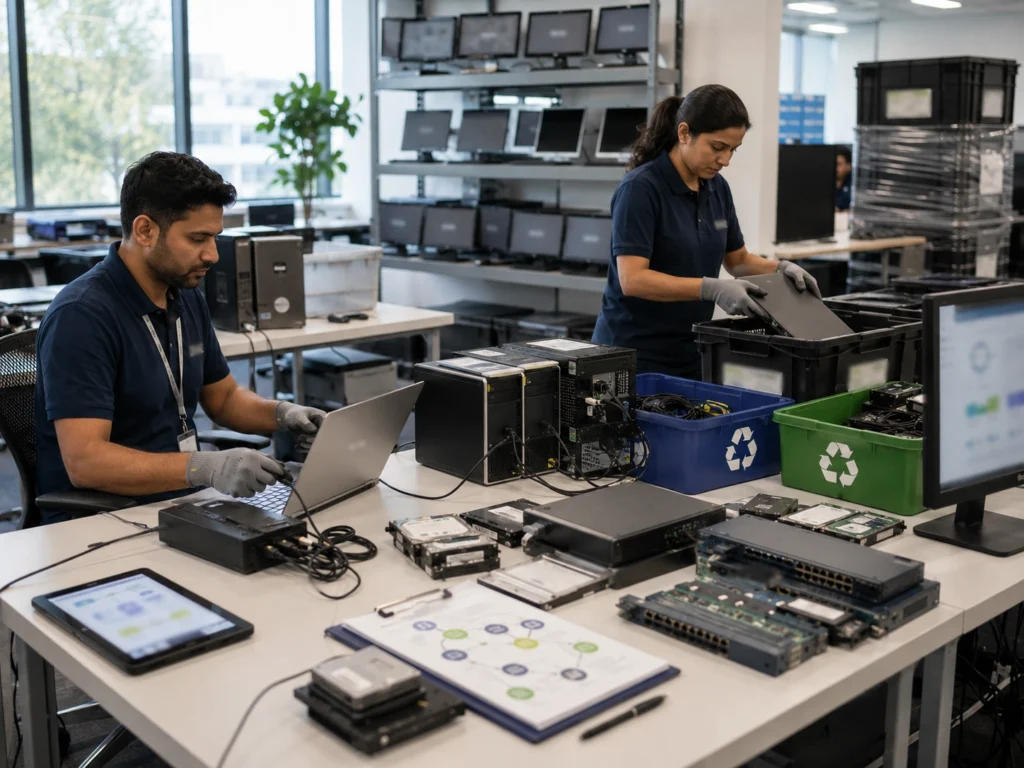
Businesses should establish a clear internal process for retiring IT assets. Otherwise, devices can pile up in storage or end up in landfill. It isn’t a responsible approach to e-waste.
Certified recyclers accredited under R2 or e-Stewards standards ensure compliant, traceable disposal. They follow documented processes that track devices from collection through recycling or refurbishment, creating a clear chain of custody. Recycling e-waste through accredited partners also supports regulatory compliance across most jurisdictions.
Just as importantly, data wiping before disposal protects sensitive business information. Particularly in the UK, improper disposal of data-bearing devices can breach UK GDPR requirements.
End-of-life management carries both environmental and legal responsibilities.
How to Cut Your Business’s Carbon Footprint Through Data Centres
From what we’ve observed, data centres are consistently the most underestimated source of IT-related emissions. They run around the clock, and their energy usage rarely gets the attention it deserves.
Let’s look at the opportunities to reduce your environmental footprint:
Greener Hosting and Data Centre Choices
Switching to a data centre powered by renewable energy sources can reduce your Scope 2 carbon emissions significantly. Not all hosting providers are upfront about their energy sources, though. So it’s worth asking directly about their fuel mix before signing anything.
In fact, green hosting providers publish their Power Usage Effectiveness (PUE) ratings, which measure how efficiently a data centre uses energy. A PUE of 1.2 or below is considered strong for modern data centres (the lower the PUE score, the more efficient the facility).
Since hosting providers control the infrastructure, choosing one powered by renewable energy can significantly reduce your carbon footprint. Many data centres still rely heavily on fossil fuels, which makes hosting a practical sustainability decision for businesses adopting green IT practices.
Measuring and Reducing Your Data Centre’s Energy Use
In our experience, a regular energy audit almost always surfaces two or three systems running unnecessarily. That’s why it helps identify which parts of your IT operations consume the most power. It’s a low-cost step with measurable results.
Virtualisation and cloud computing reduce the number of physical servers your business needs. In simple terms, virtualisation lets one server do the work of several. That cuts both energy consumption and hardware waste across your IT infrastructure.
On top of that, automatic power-down schedules for non-critical systems deliver real energy savings by preventing devices from running overnight. Businesses that do this consistently report a 10–15% drop in energy usage.
With the data centre side covered, it’s worth zooming out to see how everything fits at the organisational level.
Implementing Green IT: A Practical Starting Point
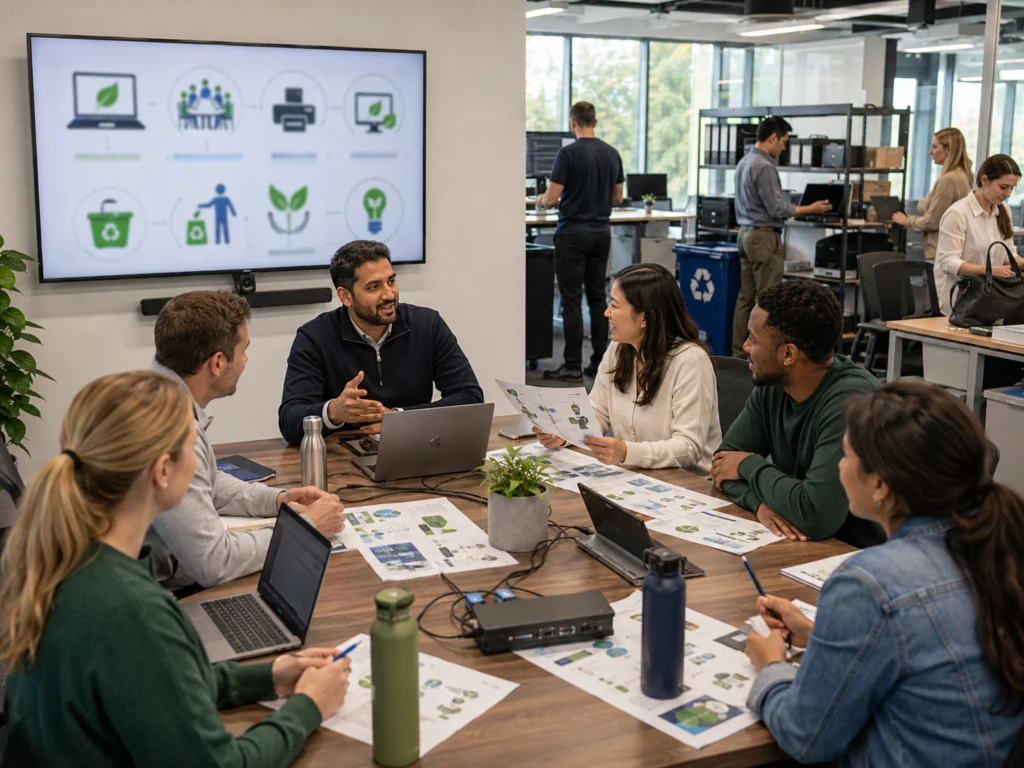
Most businesses already have everything they need to start a green IT strategy. The gap is direction rather than resources. Once the direction is set, sustainable IT initiatives become easier to expand across the business.
With that established, these areas consistently deliver the strongest early results across organisations of any size:
Building a Green IT Culture Across Your Team
Sustainable IT policies only work when staff understand why the changes are happening. Even the best green IT practices get ignored without that context. It’s something most don’t think about until the policy stalls.
Simple internal initiatives like device shutdown reminders, print reduction targets, and shared equipment schemes are low-effort improvements. In fact, these small steps are often what raise awareness across departments most effectively.
At the same time, regular awareness sessions keep green computing visible as a priority. Even a short monthly update or a dedicated IT sustainability channel can work well in practice. That way, sustainable practices don’t get buried under day-to-day business operations.
Tracking Progress and Reporting on Your IT Sustainability Goals
Businesses should set measurable green IT targets from the start. A percentage reduction in energy consumption or e-waste diverted from landfill are both solid benchmarks. Without clear targets tied to business outcomes, lifecycle management efforts tend to drift.
Once those targets are in place, tracking them gets a lot easier. Carbon accounting software and IT asset management dashboards make progress visible and easy to report, and tools like Sweep or Watershed connect directly to your IT operations data. AI features also flag inefficiencies automatically, which speeds up reporting considerably.
With that data flowing consistently, publishing an annual sustainability report builds accountability across the organisation. You’d be surprised how often this becomes one of the strongest drivers of long-term sustainable IT commitment.
Your Next Step Starts Here
Sustainable IT isn’t complicated once you know where to look. Lifecycle management, energy-efficient procurement, and responsible e-waste disposal all deliver real environmental benefits. And the cost savings that come with it aren’t bad either.
That said, the businesses seeing the strongest results don’t do everything at once. They start with an audit, set clear targets, and build from there. Progress comes from taking the first step and improving over time.
Chaire-Cycledevie has been tracking the environmental impact of technology since 2001. As new technologies shift how businesses consume energy, keeping up has never been more critical.
If you’re ready to take your IT lifecycle seriously, explore our resources for practical guidance or contact us for more information.