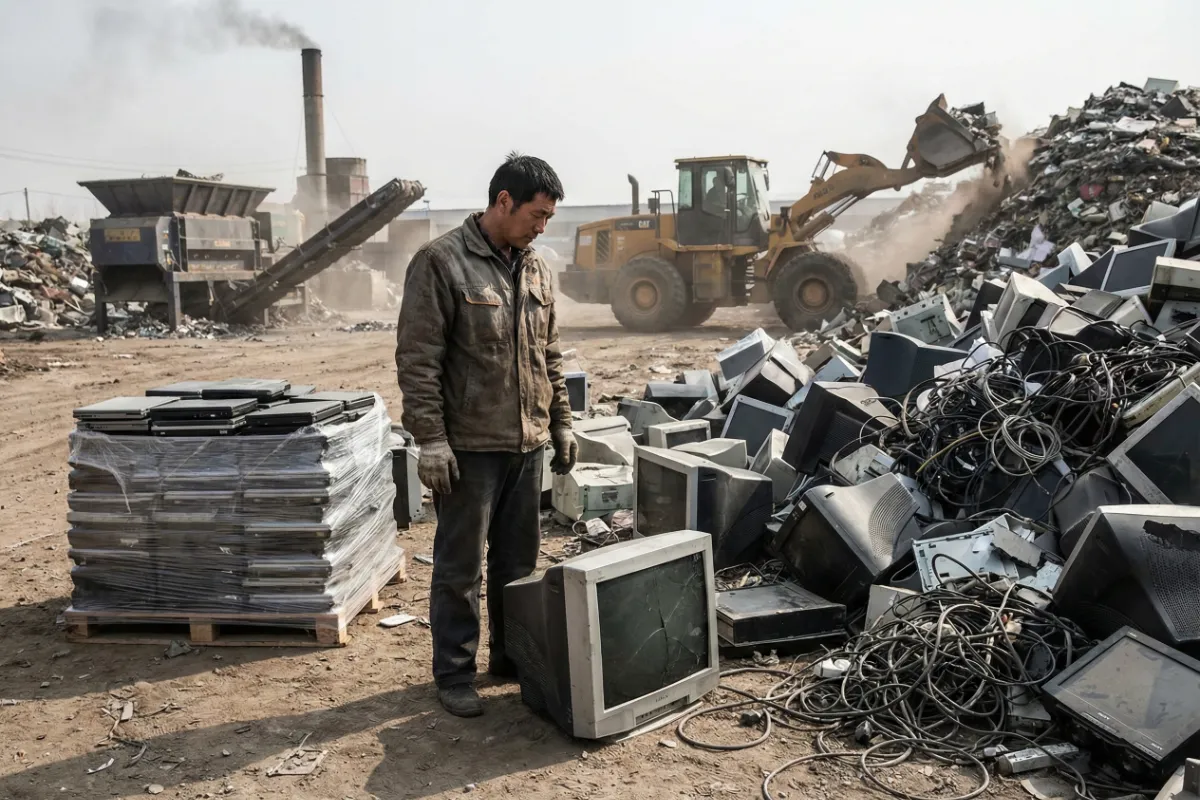
When a computer reaches the end of its life, you either recycle it for parts, send it to another country as e-waste, or simply dump it into a landfill with other old electronics. How you dispose of it determines its environmental impact.
Every year, people throw away millions of pieces of electronic equipment without thinking about what’s inside them (hint: toxic materials) or what happens after they get rid of them. At Chaire-Cycledevie, we help you make informed choices about these electronic wastes.
In this article, we’ll explain what e-waste really is and what happens to it after disposal. We’ll also share how to dispose of your old computer safely.
Read on to learn more about the importance of responsible recycling.
What Is E-Waste?
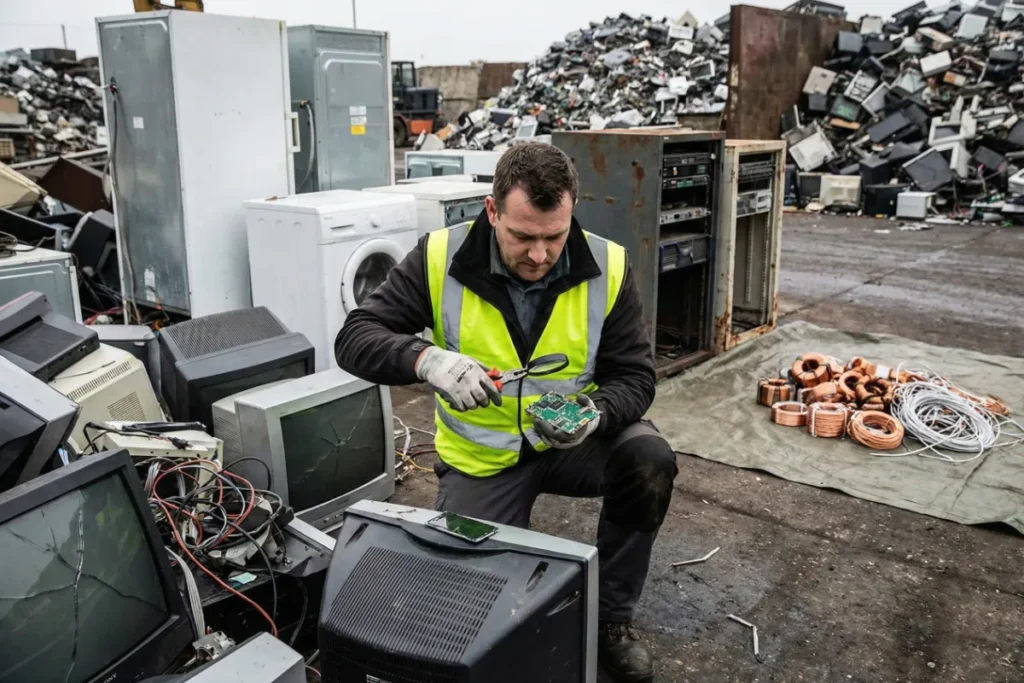
E-waste refers to any discarded electronic device with a plug or battery that’s no longer in use. Some of the examples are old laptops, broken phones, and that dusty monitor sitting in your garage.
Let’s look into the types of these wastes and what’s inside them.
Common Types of Electronic Waste
The most common types of disposed electronics include computers, mobile phones, and televisions. But in reality, they’re not the only items that count as e-waste.
Here are a few other categories:
- Large Household Appliances: Your old fridge, washing machine, or air conditioner all contain refrigerants that need special handling. When you toss them in a landfill, you risk serious environmental damage.
- Medical Equipment: Hospitals replace monitors, scanners, and diagnostic equipment every few years. Since most of them contain harmful materials, no one should just throw them away anywhere.
- Telecommunication Devices: Offices frequently change phones, routers, and servers. These items accumulate quickly, but many people don’t know how to recycle them the right way. So they often end up in the wrong places and damage the environment.
It’s up to us to ensure our waste doesn’t become someone else’s problem.
Toxic Chemicals Inside Your Computer
Did you know that your computer components have lead, mercury, and cadmium on the inside? Technically, they aren’t dangerous as long as your device is working fine. The problem begins once your PC breaks down or gets burned, which puts these toxic substances into the environment.
You’ll also find Cathode Ray Tubes (CRT) in old monitors. Believe it or not, a single CRT screen can hold up to three kilograms of lead. When that screen breaks open in a landfill, the lead on the inside slowly oozes into the soil, which eventually reaches drinking water.
But that’s not all. There are brominated flame retardants in computer circuit boards, cables, and plastic casings. So the moment you burn e-waste with these chemicals within, you release toxic fumes into the air that cause chronic respiratory issues and cancer.
Valuable Materials That Get Thrown Away
Most electronic devices contain gold, silver, and copper in good amounts. Don’t believe us? See what the World Gold Council has to say about that. According to their report, one tonne of mobile phones has 100 times more gold than one tonne of gold ore.
What’s more, around $62 billion worth of precious metals are lost in landfills every year. That’s a huge amount of valuable material thrown away. Plus, mining new metals creates a lot more carbon emissions than recycling metals from old electronics (what a waste, literally).
And don’t forget about rare earth metals. We’ve seen recycling facilities simply ignore these valuable materials because the extraction cost is too high. Specifically, the cobalt recovery rate is pretty low, even though you have the technology to recycle 95% of it with more than 99% purity.
As you can see, recycling is not only better for the planet, it also saves energy and reduces harmful emissions.
Pro tip: If your old device still has usable parts, donate it to a local repair shop. They may be able to salvage components for other repairs.
What Happens to Your Computer After You Dispose of It?
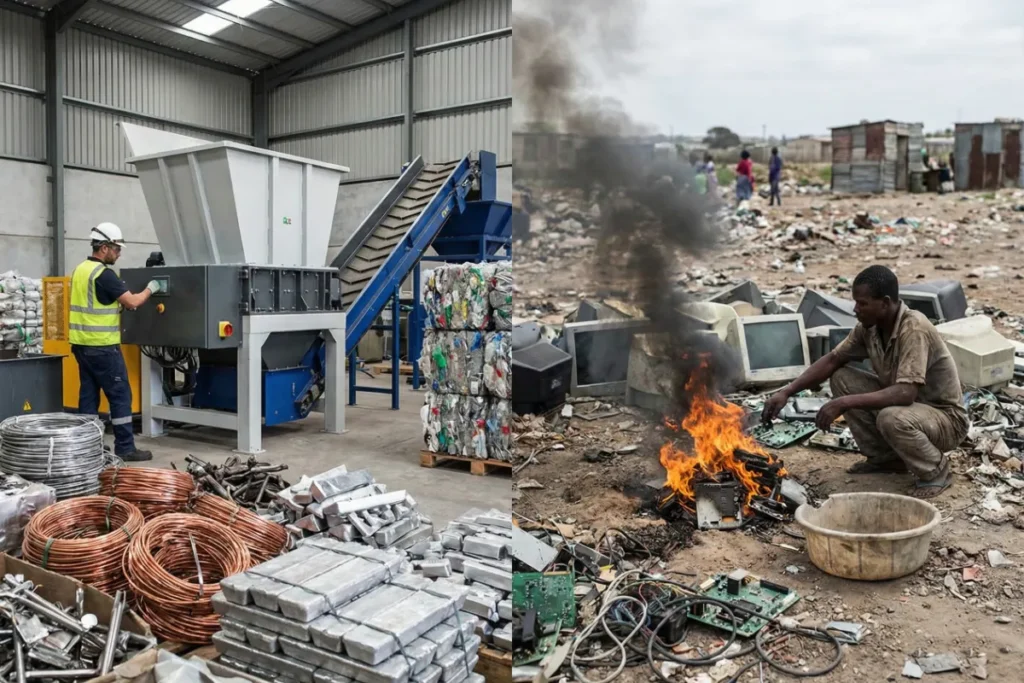
Your computer might end up in a waste site or get shipped to an overseas dumping site after disposal. Or it goes to a certified recycling facility. Its destination depends entirely on how you get rid of it.
Let’s get into more details.
Certified Recycling Facilities
In a certified recycling facility, workers shred old electronics and separate metals from plastic. Magnets remove iron and steel, while conveyor belts sort everything else into piles of copper, aluminium, and circuit boards.
This process recovers valuable materials from e-waste for reuse. For example, recyclers extract gold, palladium, and silver and sell them back to manufacturers. Also, they melt down plastics to make new products.
That said, as per the Global E-waste Monitor 2024 published by the International Telecommunication Union (ITU), only 22.3% of global electronic waste is formally recycled. The rest is disposed of in less regulated environments.
Overseas Dumping Sites
You’re probably wondering where these overseas dumping sites are. They’re mostly in developing countries like Ghana and India. In Ghana, Agbogbloshie has become one of the world’s largest e-waste dumping sites, where electronics from Europe and America arrive in large amounts.
The worst thing about these sites is that the workers often use dangerous methods like acid baths and open burning to recover metals. They burn circuit boards over open flames without any protective gear just to get small amounts of copper and gold.
To control the movement of toxic waste like this, the Basel Convention works relentlessly without much effect. And as no one enforces the law properly, the illegal shipments still continue.
Health Risks for Workers and Communities
We’ve already mentioned that open-air burning releases harmful chemicals into the air. For instance, lead, mercury, and dioxins spread through the air and land on nearby homes, schools, and farmland.
Pregnant women and children are the most at risk here. And it’s because those toxins can pass from mother to baby through the placenta and breast milk.
Even if you leave out everything else, lead exposure alone damages brain development and affects entire communities. It’s a tough cycle, and it won’t stop as long as e-waste keeps coming in.
Pro tip: Keep an eye on local e-waste recycling events. Many communities host free collection days for electronics disposal and proper recycling.
How Do You Dispose of Your Old Computer Safely?
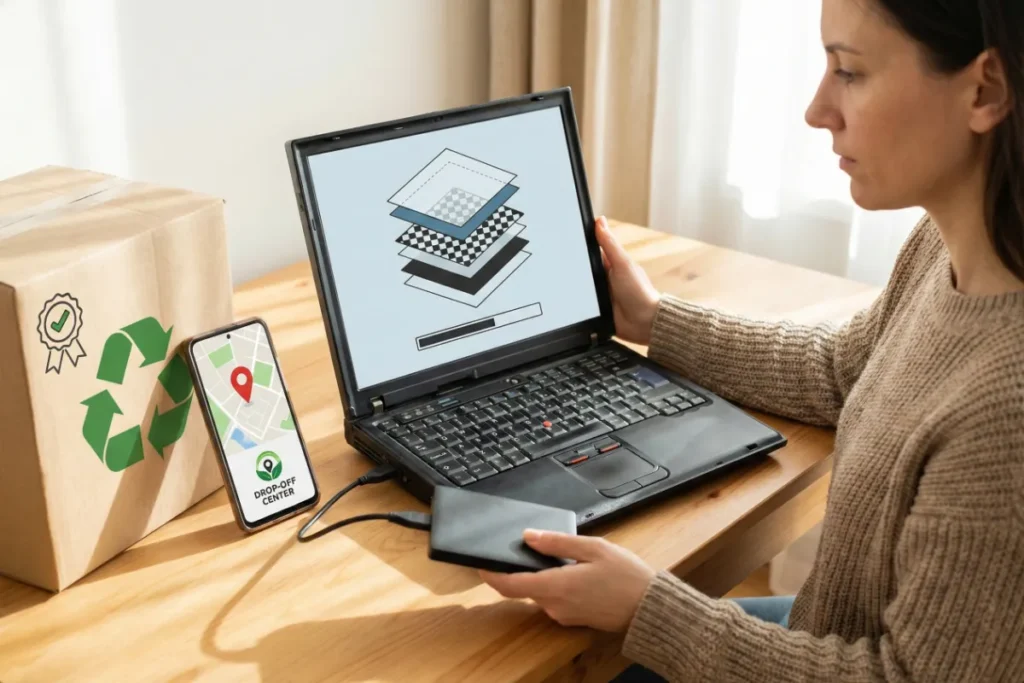
You dispose of your old computer safely by wiping your data to protect your personal information first. Then drop it off at a certified recycler or participate in a retailer’s take-back programme. It’s an easy process, and you have several options based on what works best for you.
Follow the steps below for a good e-waste recycling experience:
- Back Up Your Files: Back up your photos, documents, and important files to the cloud or an external drive. Skipping this step is a prevalent mistake that makes people regret it later on.
- Use Disc-Wiping Software: Programs like DBAN or Eraser overwrite your hard drive with random data a few times. After that, it becomes almost impossible to recover anything, even for experts.
- Physically Remove the Storage Drive: Are you feeling extra cautious? Take out the hard drive or SSD and keep it somewhere safe (or smash it yourself if you prefer). The rest of your machine can still go to a recycler without any issues.
- Look for R2 or e-Stewards Certification: These labels mean the recycler actually meets strict environmental and security standards. Not everyone with a “We Recycle Electronics” sign out front is doing things by the book.
- Avoid Dodgy Recyclers: We’ve seen some companies claim to recycle electronics, but they actually ship them overseas illegally. So, do a quick online certification check. It takes just two minutes and ensures they’re handling your e-waste properly.
- Retailer-Run Drop-Off Programmes: Dell, Apple, Best Buy, and Staples all take old electronics at their stores. Some even offer store credit for your next purchase, which makes it a better deal.
- Donate Your Computer: If your PC still works, you can donate it to schools, charities, and community centres. They always look for functioning computers. Just make sure you wipe your data before handing it over.
Remember, every small action counts when it comes to protecting our planet from e-waste.
Don’t Let Your Old Computer End Up in the Wrong Place
Now you know how important it is to dispose of your old computer properly. Since it contains toxic chemicals, precious metals, and personal data, what happens to it after you get rid of it is really important.
If you’ve got old electronics gathering dust at home, don’t wait too long to sort them out. Find a certified e-waste recycler near you and give your old tech the ending it deserves.
And if you have any questions, feel free to reach out to us. We’ll guide you through the recycling process.