
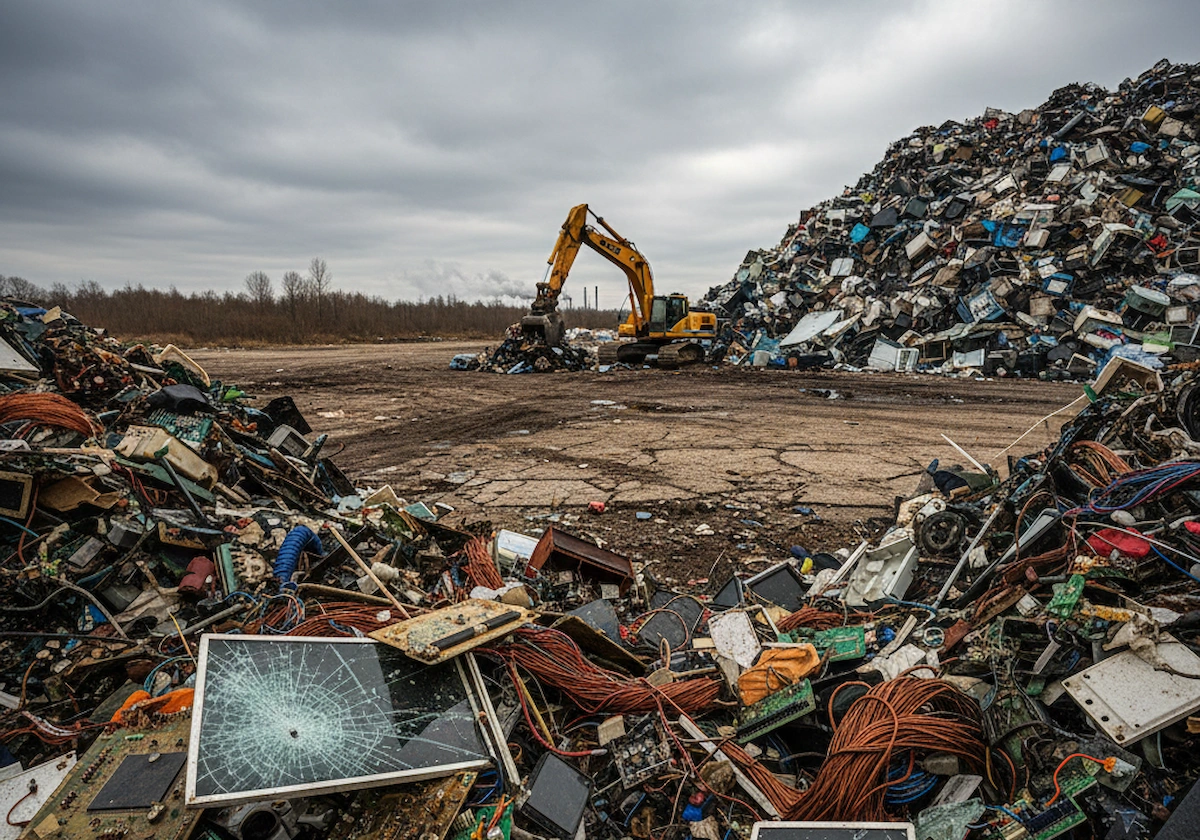
A computer’s materials affect the environment through mining, chemical processing, and global transportation long before you ever turn it on.
The damage starts underground through the extraction of metals like cobalt and rare earth elements. They destroy habitats, pollute water, and release carbon into the atmosphere. At Chaire-Cycledevie, we help individuals and organizations understand these lifecycle impacts.
In this article, we’ll break down where your device’s materials come from. We’ll also discuss how manufacturing drains resources through the lens of materials science, materials engineering, materials research, and basic research. Plus, you’ll learn what to do to reduce these impacts.
Ready? Let’s get started.
How Does Sourcing Tech Materials Affect the Environment?
Sourcing tech materials affects the environment by putting pressure on natural resources and the natural environment. For example, mining and processing materials can cause habitat destruction, water pollution, and air pollution, which harm animals, species, and human health.
More specifically, high energy use and carbon dioxide emissions contribute to climate change. As human activity and demand for technology increase, these environmental effects become harder to ignore. Most of us never see that side of the story without an environmental impact assessment.

Here’s what that process looks like (bear with us because we’ll share a lot of numbers):
- Mining’s Toll on Land and Water: According to a UN study, it takes about 1.8 tonnes of raw materials to manufacture a single desktop computer. That’s almost the weight of a small SUV. The process involves carving up for open-pit mines, where acid runoff poisons rivers for decades. This displaced wildlife rarely comes back.
- Cobalt Extraction and Its Human Cost: If you didn’t know what powers your devices, the answer is cobalt from the Democratic Republic of Congo. Around 70% of the global supply comes from there, and they are often mined by hand. The workers also breathe in dust, which leads to chronic (sometimes fatal) respiratory illness.
- Rare Earth Processing and Toxic Waste: These elements make devices compact and powerful, but the tradeoff is severe. For instance, one ton of rare earth ore generates up to 2,000 tons of toxic waste. And 87% of its processing happens in China, where some villages near facilities have dealt with radioactive contamination for years.
- The Carbon Footprint Before Assembly: Even after mining and processing, components still need to travel. Like, a laptop’s parts might cross four continents before someone assembles the final product. All that movement adds to the device’s total carbon emissions before you’ve even turned it on.
As you can see, what powers innovation also places growing pressure on natural resources. That’s why it’s really important to source materials more responsibly.
What Raw Materials Go Into Your Computer?
Your computer contains over 50 elements across interconnected materials systems, including rare earth metals, heavy metals like lead and mercury, and synthetic chemicals. Most of these materials come from mines scattered across the globe.
Each type of element plays a specific role in making your device function based on its material properties, and all of them carry an environmental cost.
Let’s get into more detail about these impacts.
Rare Earth Elements and Magnetic Materials
Have you ever wondered how your hard drive stores data or how your screen shows bright colors? The answer lies in rare earth elements.
Even though their name suggests otherwise, these materials are not truly rare. Instead, they are spread thinly in the earth, which makes them hard to extract. Companies use complex processes informed by materials research to obtain them for this reason.
For example, elements like neodymium and dysprosium help create strong magnetic materials used in hard drives and speakers. These elements allow devices to remain small and lightweight (which helps balance power and size).
However, recycling the rare metals still remains a major challenge. Most of them are thrown into landfills instead of being reused. As the demand for electronics continues to increase, companies have to expand mining to supply new devices.
Heavy Metals and Synthetic Chemicals
Heavy metals and synthetic chemicals give components durability and heat resistance, but they come with serious environmental tradeoffs. In particular, circuit boards contain lead, mercury, and cadmium to conduct electricity and resist wear, while flame retardants prevent overheating. These materials work well inside your device.
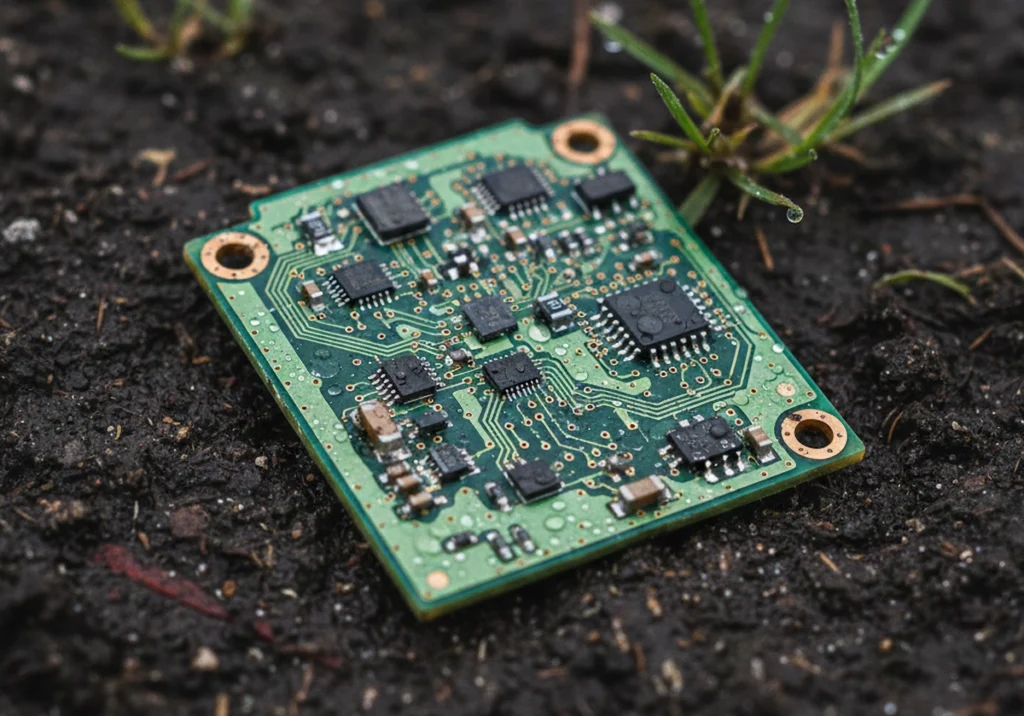
But the main trouble is in the way people dump them in landfills. We’ve seen photos of e-waste sites where workers burn old electronics for copper. Doing so is harmful because heavy metals seep into groundwater, and synthetic chemicals linger for decades.
Keep in mind: Devices labeled as “lead-free” may still contain other hazardous metals, so the label does not guarantee a low environmental impact.
Why Does Manufacturing Use So Many Resources?
Manufacturing uses many resources because making semiconductors with advanced materials requires extreme precision. To do this, factories rely on ultra-pure water and constant energy to build chips at the atomic scale using techniques like chemical vapor deposition.
Since every step needs carefully controlled conditions, the process uses large amounts of electricity and water.
Time to learn more about the reasons behind these uses.
Water and Energy in Chip Production
According to Semiconductor Digest, in their page “Managing the Impact of Semiconductor Manufacturers’ Use of Freshwater,” a single semiconductor fabrication plant can use up to 10 million gallons of water per day. That’s comparable to the daily water use of a city-sized population.
And when it comes to electricity demand, McKinsey & Company notes in its report “Bringing energy efficiency to the fab” that a single semiconductor fab can draw up to 100 megawatt-hours per hour. This electricity is more than what many automotive plants or oil refineries use.
But manufacturers must use these resources to maintain purity. For instance, silicon wafers need repeated rinsing with ultra-pure water to remove microscopic contaminants. Even a speck of dust can ruin a batch (cleanliness is absolutely nonnegotiable here).
Unfortunately, most of that water becomes too contaminated to release without treatment. So in drought-prone regions like Arizona and Taiwan, it creates huge tension between manufacturers and local communities.
Chemicals and Air Emissions From Factories
Semiconductor production relies on acids, solvents, and gases to etch circuits onto silicon. Some of these, like Per- and Polyfluoroalkyl Substances (PFAS), are called “forever chemicals” because their chemical properties prevent them from breaking down naturally. They survive in soil and waterways indefinitely when factories release them.
In 2023, regulators in Europe and the U.S. began pushing for stricter limits on PFAS emissions. But enforcement is slow, and factories in Asia often operate under looser rules.
What Can You Do to Lower Your Device’s Environmental Impact?
You can reduce your device’s environmental impact by using it longer, choosing refurbished options, and using certified e-waste recycling programs. These small changes help cut down on waste and resource use.
The goal is not to be perfect, but to make better choices that lower the need for new mining and manufacturing.
We’ll now explain the ways we just mentioned.
Extend the Life of Your Current Devices
Believe it or not, keeping your current device one extra year reduces its lifetime environmental footprint by up to 25%. That’s a big return for doing very little.
Now, if you want to take this approach, you can start by replacing a worn battery. You can also clear out old files to improve performance. Plus, keeping your software updated can help devices last longer, even though manufacturers don’t always make it easy.
We get that the urge to upgrade is too strong, and new models always look tempting. But in truth, most of a device’s environmental damage happens before you even open the box. That’s why holding onto what you have is the simplest way to shrink your footprint.
Useful tip: Research your device’s lifecycle to make sure you get the best out of your device before even purchasing it.
Recycle Through Certified E-Waste Programs
Once a device truly reaches the end-of-life, how you dispose of it is important. It’s because certified recyclers can safely recover valuable materials like copper and gold without harming the environment. Since they follow strict rules, they keep toxic substances out of soil and water.
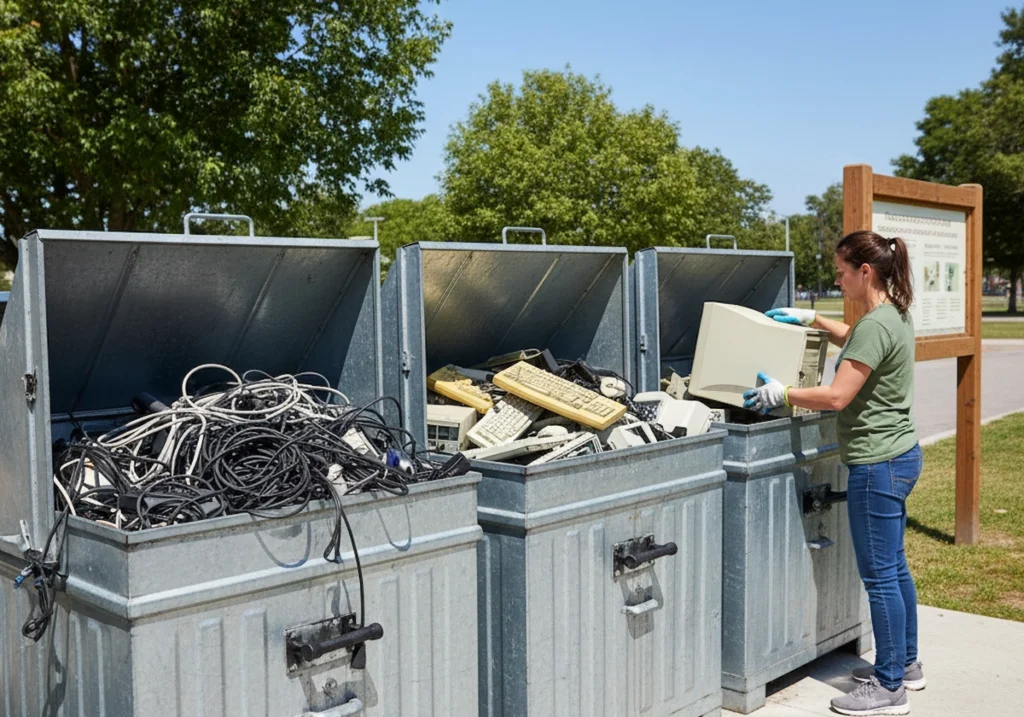
That said, these options are not always easy to find, which is why only about 17% of global e-waste is recycled properly.
So where do you start? In the United States, programs like e-Stewards and R2 certify recyclers that follow responsible practices. Also, many electronics stores offer take-back programs for old devices. A quick online search can help you find a nearby drop-off location.
Making Better Choices for the Planet
That’s it for our breakdown of how tech materials affect the environment. You now know that a device’s biggest environmental impact happens long before you power it on.
At Chaire-Cycledevie, we help people and organizations understand the environmental impact of a product over its entire life. If you’re looking to reduce your tech footprint or need guidance on responsible electronics disposal, reach out to our team today.