

Before your laptop ever reaches your desk, it’s already responsible for a significant share of its lifetime carbon emissions. For example, raw material extraction, manufacturing processes, and long-haul shipping all generate CO₂. That output frequently exceeds several years of the device’s daily energy use combined.
This article looks at why replacing devices too soon increases environmental impact. It also covers how managing equipment lifecycles can extend a device’s life and what sustainable tech choices look like in daily use.
By the end, you’ll know where the real carbon cost hides and which steps help reduce it.
What Is Embodied Carbon, and Why Is This Important?
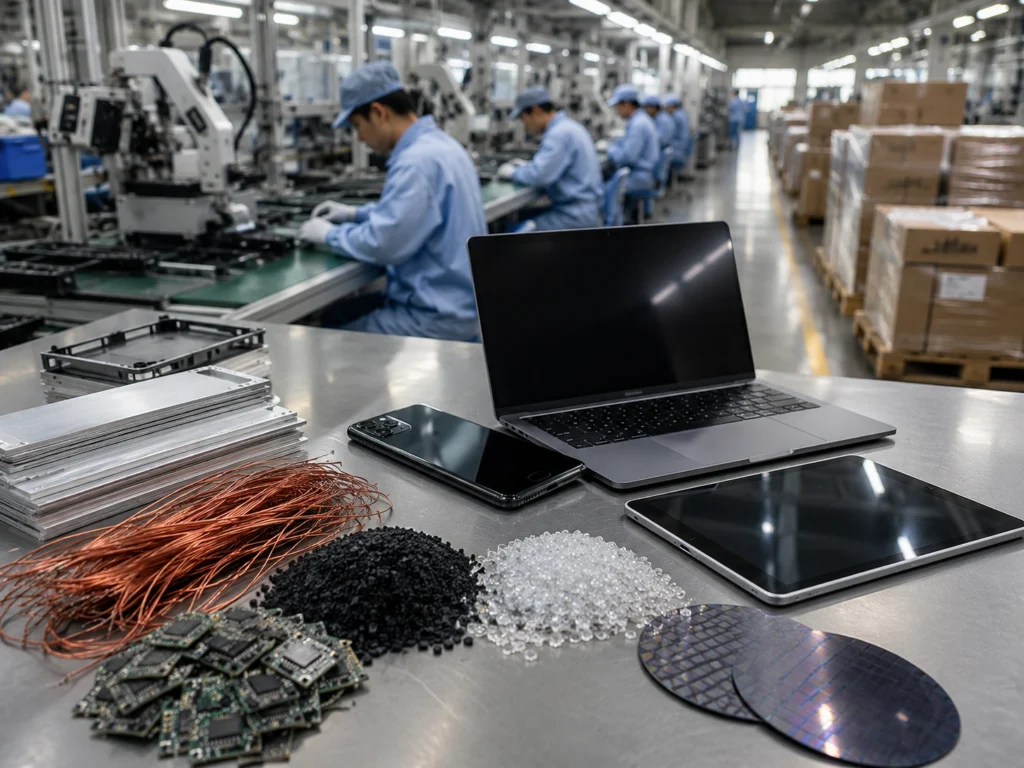
Embodied carbon is the total CO₂ released during a product’s extraction, manufacturing, and shipping, before you ever switch it on. For most devices, production emissions make up the largest share of their carbon output. Despite this, people often focus more on energy bills and charging habits when discussing tech and the environment.
A few things embodied carbon covers include:
- Raw Material Extraction: Lithium, cobalt, and rare earth metals all require energy-intensive mining operations that release substantial CO₂ long before any component reaches the factory floor.
- Production Emissions: According to a ResearchGate study, a single smartphone generates up to 55 to 95 kg of CO₂ during manufacturing (equivalent to driving roughly 175 miles in a petrol car).
- Global Shipping: Long-haul distribution routes mean a device changes hands multiple times before reaching a retailer, and each leg of that journey burns additional fuel.
By the time a device reaches your hands, its environmental footprint is already considerable. Replacing it early starts the entire production cycle over from scratch.
The Carbon Footprint of Making a Single Device
One device can produce more emissions than it consumes in electricity over several years. Apple’s 2023 Environmental Progress Report confirms a 13-inch MacBook Pro generates roughly 167kg of CO₂ in production. That same laptop produces less than one-third of that figure on UK mains electricity for four years.
The manufacturing burden doesn’t stop at carbon. Extracting one tonne of rare earth elements generates up to 2,000 tonnes of toxic waste. Those materials sit inside nearly every consumer device sold today, which makes each unit costlier to the environment than its price tag suggests.
When you multiply those impacts across millions of devices replaced every two to three years, the environmental cost grows rapidly.
Current research supports this pattern. Embodied carbon electronics research is still a developing field, but the data consistently point to production as the dominant cost across a device’s entire life.
As you can see, the world’s demand for new technology pushes our limited resources at every stage of extraction. Manufacturing efficiency improves performance, but it does not solve the whole issue. A longer equipment lifespan addresses it directly.
Equipment Lifecycle Management: How Long Should Devices Last?
Devices last considerably longer than the upgrade cycles most manufacturers and retailers promote. In consequence, equipment lifecycle management tracks and extends the productive life of technology assets. Organisations that apply it well reduce both operational costs and manufacturing emissions without sacrificing performance.
To achieve that, a structured equipment plan considers real usage patterns and operational demands. This cuts downtime and reduces long-term costs. Lifespan data rarely features in purchasing decisions, yet it’s one of the most revealing factors in calculating the true cost of ownership.
Two areas are worth examining closely before your next upgrade decision:
1. What the Average Lifespan of a Device Looks Like in Practice
Software slowdowns and alerts from manufacturers can make people want to replace parts. This happens even if the components are still functioning well.
The figures below show the gap between hardware capability and actual replacement behaviour across common device categories:
- Laptop Longevity: Hardware in most laptops supports six or more years of reliable use, yet household upgrade cycles average closer to three years across the UK and Europe.
- Mobile Phone Cycles: Smartphone components remain fully functional for five to seven years in normal use, though global consumers replace handsets every two to three years on average.
- Ownership Extension: Each extra year spreads a device’s emissions over a longer time. Because the total emissions stay the same, but more years reduce the carbon output yearly impact.
Planned obsolescence sits behind much of this behaviour. Many manufacturers release software updates that can slow down older devices. This pushes consumers to replace devices that still work fine.
In reality, the majority of devices outlast the time spent waiting for a newer model. That gap between perceived and usable life is where sustainable tech habits take root, and where organisations can make the clearest impact on efforts to reduce e-waste.
2. Security Risks vs. Environmental Impact: Finding the Balance
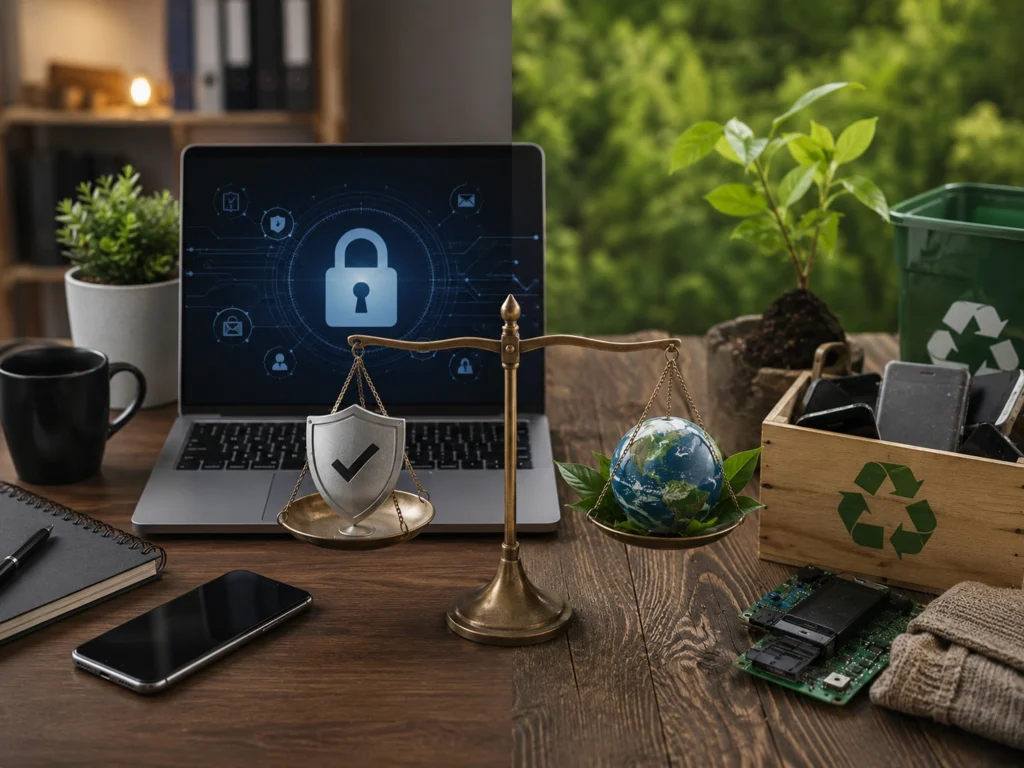
Keeping older devices secure is achievable without rushing into a brand-new purchase. The tension between data security and environmental responsibility is real, but the two don’t have to pull in opposite directions.
Some factors organisations and individuals overlook when weighing up device security against sustainability:
- Certified Refurbished Devices: Pre-owned equipment with professional testing and component replacement ensures reliable performance at a lower cost. It significantly reduces carbon footprint, electronic waste, and demand for new devices.
- Policy-Driven Replacement: Many organisations cycle out hardware on a fixed schedule driven by internal policy, which helps maintain consistent performance and reduces the risk of unexpected system failures.
- Extended Security Updates: Microsoft’s Extended Security Updates programme for Windows 10 extends protection for years. So you can use current devices securely without the need for immediate hardware replacement.
Ultimately, a targeted software update or a certified refurbished replacement resolves security concerns in the vast majority of cases. On the other hand, early retirement of functioning hardware adds unnecessary manufacturing emissions without meaningfully improving data protection.
The Environmental Impact of End-of-Life Disposal
Poor disposal creates environmental harm, distinct from the emissions tied to production. In fact, the Global E-Waste Monitor recorded 53.6 million tonnes of electronic waste in 2019. Only 17.4% of the total was recycled. The rest went to landfills or informal burning sites, with no way to recover the material.
The table below sets out what each disposal route releases or recovers:
|
Disposal Method |
Environmental Outcome |
|---|---|
|
Informal burning |
Releases lead, mercury, and dioxins directly into surrounding air and soil |
|
Landfill dumping |
Cadmium and arsenic leach into groundwater over years of exposure |
|
Certified recycling |
Recovers gold, copper, and salvageable components for reuse in new production |
|
Manufacturer take-back |
Returns devices to circular economy programmes, reducing demand for virgin material extraction |
Disposal choices at this stage determine whether a device’s materials re-enter productive use or become a long-term liability for surrounding ecosystems. So choose a certified recycler or a manufacturer’s return program. This will keep recoverable materials out of landfills.
Learn more about the full journey of electronic recycling.
Sustainable Technology Habits Worth Adopting Today
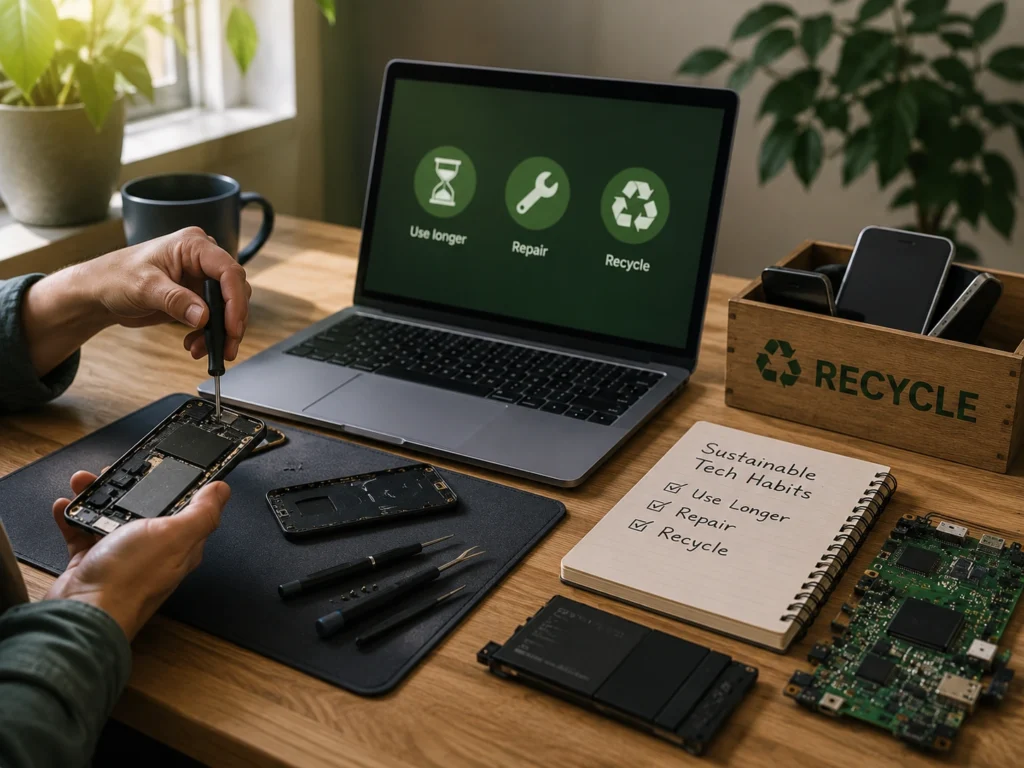
Sustainable tech use relies on three main practices: longer ownership, responsible repair, and informed disposal. Small decisions about how you maintain and extend your equipment add up to a device’s entire lifespan.
Four areas where proper maintenance and informed choices deliver the clearest returns:
- Battery Replacement: A worn battery drives more unnecessary upgrades than any other single point of failure. On the other hand, professional replacement costs between £30 and £80 for most laptops and mobile phones. That restores full working performance at a fraction of the environmental cost of a new device.
- Storage and RAM Upgrades: For laptops showing sluggish performance, the cause frequently traces back to storage limitations or insufficient memory rather than ageing components. An upgrade to either typically costs under £50 and extends reliable use by two to four years.
- Certified Refurbished Hardware: Equipment tested and restored to manufacturer standards performs comparably to new equivalents. For businesses with tight budgets and specific output needs, it’s a cost-effective route that sidesteps the carbon burden of fresh manufacturing entirely.
- Manufacturer Take-Back Schemes: When your device is no longer useful, register it with Dell, HP, or Apple. This way, it goes into a certified waste recovery stream instead of general disposal.
Routine upkeep extends working life further still. For example, cleaning vents with compressed air prevents heat build-up that degrades internal components.
Pro Tip: Keep equipment away from windows, as direct sunlight accelerates battery wear. At the same time, use protective cases to guard against physical damage and extend the device’s productive lifespan.
Your Next Device Decision Could Be Your Greenest One
How long you keep a device and how you maintain it both affect the environment. Most people never see these impacts in product details, including what happens when the device is no longer needed. The carbon cost, the toxic materials, and the recoverable value are present at every stage of a device’s life.
So repair before you replace. Choose refurbished equipment where your performance needs allow. Plus, register old hardware with a return programme when it genuinely reaches the end of its useful life. Each of those decisions keeps a device’s full environmental cost from being written off before its time.
Chaire-cycledevie has spent over two decades studying how technology impacts the planet at all stages of its life. Browse our guides on device lifecycles, e-waste, and responsible tech choices to build on what you’ve read here.