Most of us have a drawer full of old electronics we never quite got around to sorting. Take a cracked phone from two upgrades ago, or a charger that no longer fits anything. All of it counts as e-waste, yet most of it never gets treated that way.
When electrical and electronic equipment are thrown away, it becomes part of one of the fastest-growing waste streams on the planet, one that most people barely think about.
In recent times, electronic waste, or e-waste, is a global issue with real consequences. Millions of discarded electronic devices enter the waste stream every year. This article explores where e-waste goes and reveals the environmental and social impacts of improper disposal.
Where Does Electronic Waste Go After Bin Day?
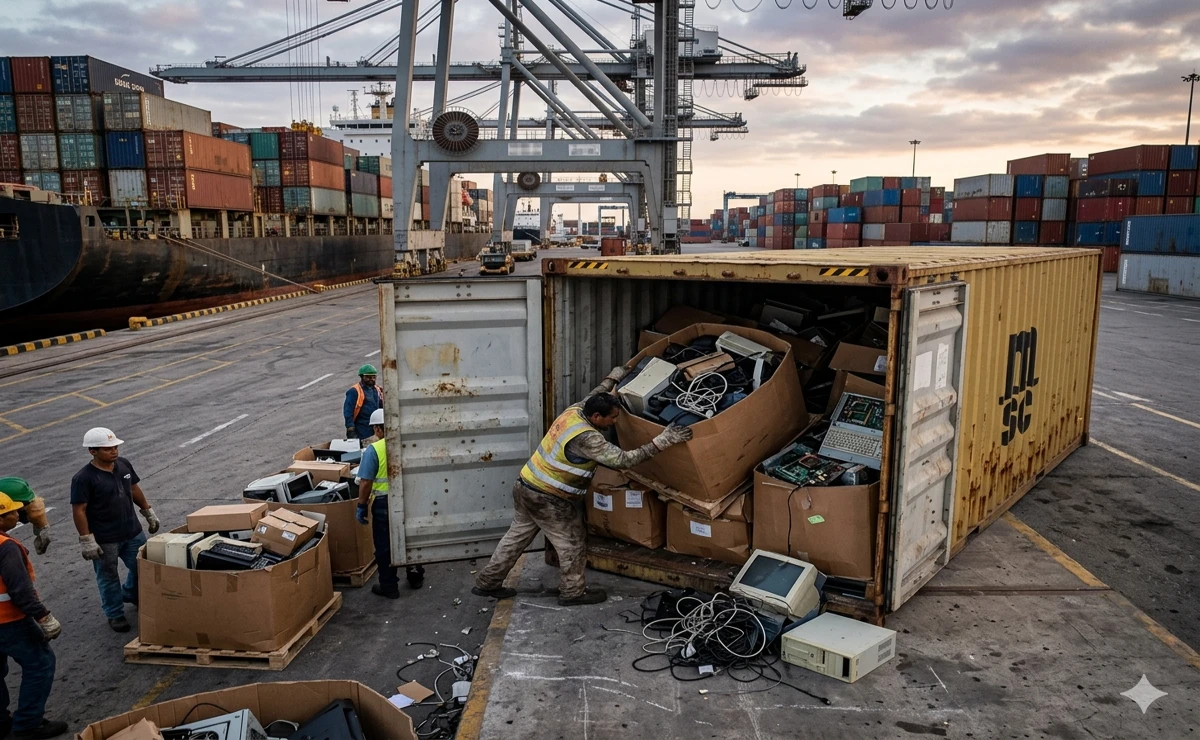
Every year, millions of tonnes of e-waste generated around the world end up in the wrong place. A portion reaches certified recycling centres, but the rest goes into general bins, sits in storage, or is shipped abroad. And that last route is where things get complicated.
Much of the electronic waste that leaves wealthier nations travels to countries without the infrastructure to process it safely. Once it crosses borders, it gets relabelled as second-hand goods. The places it lands are rarely equipped to handle it.
Electrical Items That Never Make It to a Facility
Smaller electrical items are some of the most routinely binned pieces of unwanted electronics. For example, mobile phones, cables, and even washing machines are all classified as WEEE waste, or Waste Electrical and Electronic Equipment.
Once these electrical items reach the end of their useful life, most go straight into general rubbish.
E-Waste Recycling: What the Process Actually Looks Like
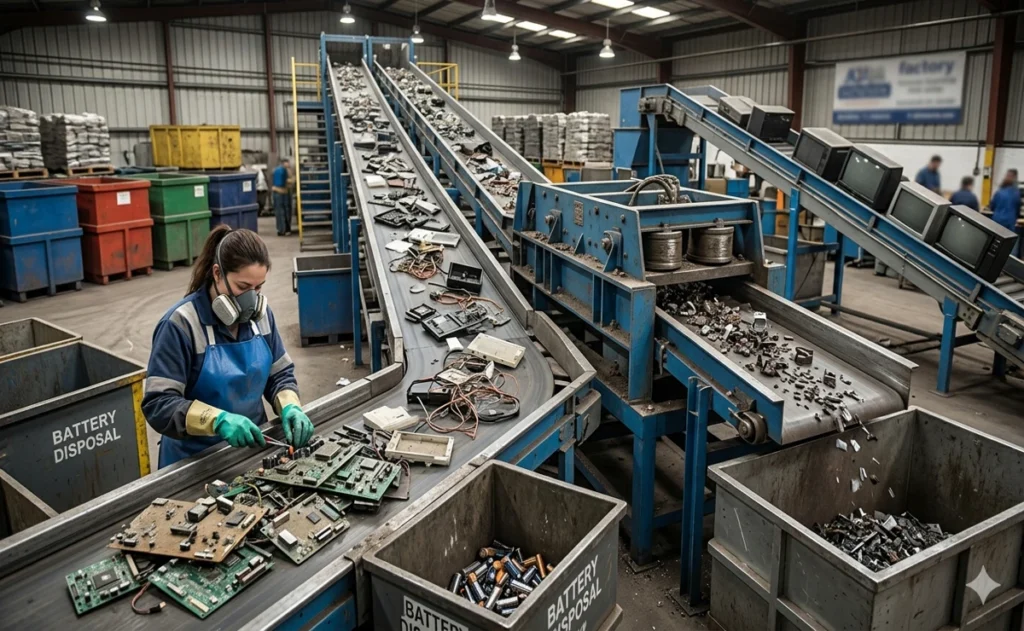
Not every piece of discarded electronic equipment ends up abandoned. When it works as intended, e-waste recycling follows a careful, step-by-step process. The aim is to recover as much material as possible and keep hazardous substances contained.
How Electrical and Electronic Equipment Gets Sorted
Devices arriving at a facility are first sorted by type. From there, electrical and electronic equipment like televisions and cathode-ray tubes go through different handling routes.
Workers remove hazardous substances in electronic components, such as batteries, by hand first. After that, automated systems use magnetic separation to pull out ferrous metals and sort the remaining raw materials.
What Gets Recovered, and What Gets Left Behind
Electronic components like circuit boards hold such precious metals as gold and silver. That’s why material recovery is the main driver behind the financial value of e-waste recycling. That’s why certified recycling facilities invest heavily in recovering reusable resources.
In fact, recycled metals and secondary raw materials need far less energy to produce than fresh alternatives. Plastics and glass, though, are considerably harder to reclaim at quality.
Why Developing Countries End Up Carrying This Burden
A significant share of e-waste never stays in the country that produced it. Much of it travels to developing countries, mislabelled as second-hand goods to sidestep tighter controls.
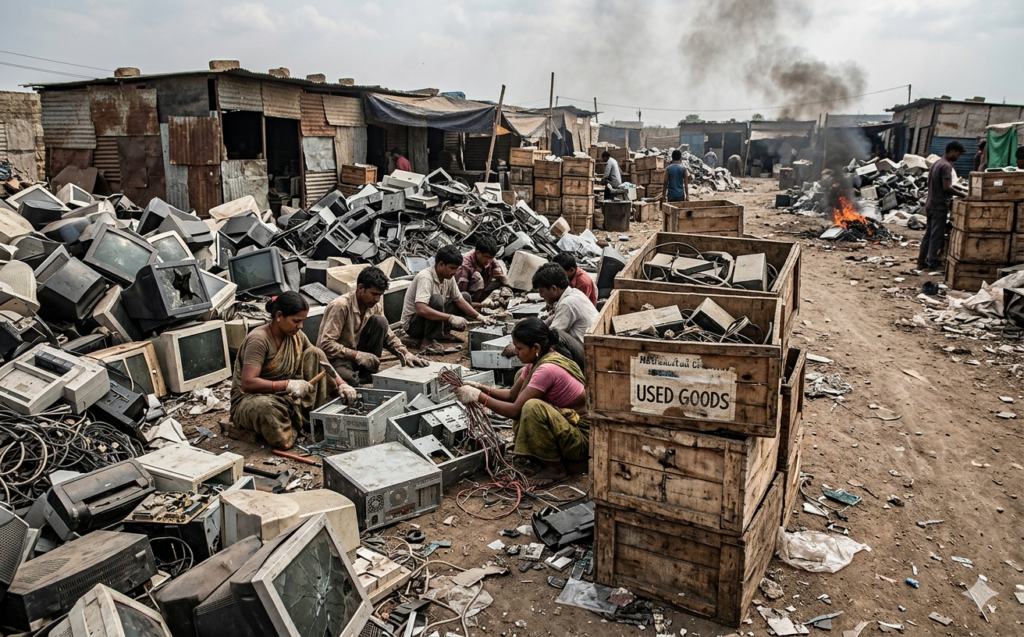
Therefore, the United Nations has flagged the transboundary movement of waste electrical goods as a growing concern. Once this e-waste arrives in developing countries, informal recycling takes over, and workers strip devices for valuable raw materials.
However, developing countries rarely have the recycling infrastructure to process these shipments safely. The toll on nearby communities is significant, with contaminated soil and water a common consequence. Another challenge involves what happens after e-waste enters global waste streams.
As a consequence, the United Nations Institute has tracked and documented illegal trafficking in this type of e-waste.
E-Waste Management and Human Health: How Bad Does It Get?
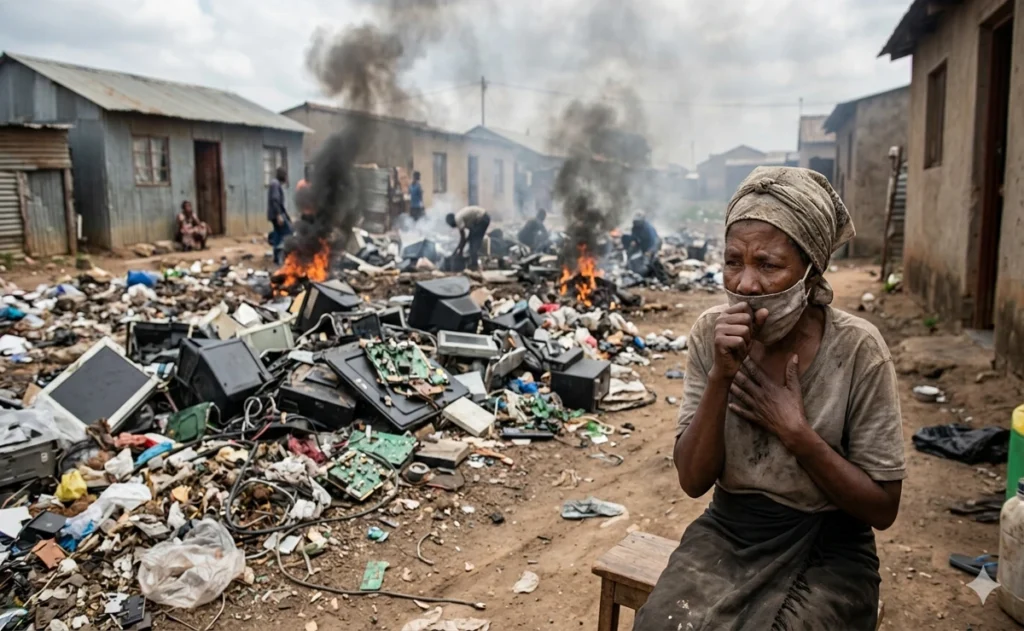
Poor e-waste management creates health risks that stretch far beyond recycling facilities. In fact, toxic chemicals and harmful substances have both been linked to nervous and respiratory conditions in surrounding communities.
Without environmentally sound management, entire waste streams of e-waste remain largely uncontrolled. How carefully it gets handled depends almost entirely on where it ends up.
The Environmental Impact That Builds Over Time
Heavy metals from discarded e-waste leach into soil and groundwater gradually. They build up in ecosystems slowly, and visible signs at the surface are often absent entirely.
The World Health Organization has raised concerns about the long-term environmental impact of such hazardous waste. One driver of this is open-air burning, which releases toxic materials like dioxins and furans into local air.
What Poor Electronic Waste Disposal Looks Like on the Ground
Circuit boards are regularly subjected to open-air burning at informal processing sites across Africa and Asia. The challenges of electronic waste management and resource recovery in a circular economy can help explain why these practices persist. The International Labour Organization has flagged this practice for the harm it causes to workers and nearby residents.
Effects on human health extend beyond workers in these settings. Child health is particularly at risk, as early exposure to toxic substances has been linked to irreversible health effects.
Four Things to Know Before Recycling Electronics
A few key facts can make e-waste easier to understand and manage responsibly. Here are four things worth knowing before you throw anything out.
- What Counts as E-Waste: Electronic goods like mobile phones, laptops, and telecommunication equipment all count. So do smaller unwanted electricals like kettles and hairdryers.
- Recycling has Become Easier: Most local authorities run collection schemes, and recycling centres accept a wide range of electrical and electronic items. Your nearest recycling centre is probably not as far as you’d expect.
- The Global E-Waste Keeps Growing: The United Nations University tracks how much e-waste is generated each year globally. Pilot projects and global platforms are raising awareness, but the volume keeps rising.
- Your Choices Support Sustainability: Properly disposing of unwanted electronics reduces your carbon footprint and keeps hazardous materials out of the ground.
Taken together, these realities can help you make better decisions when disposing of unwanted electronics.
Your Next Step Starts With One Small Choice
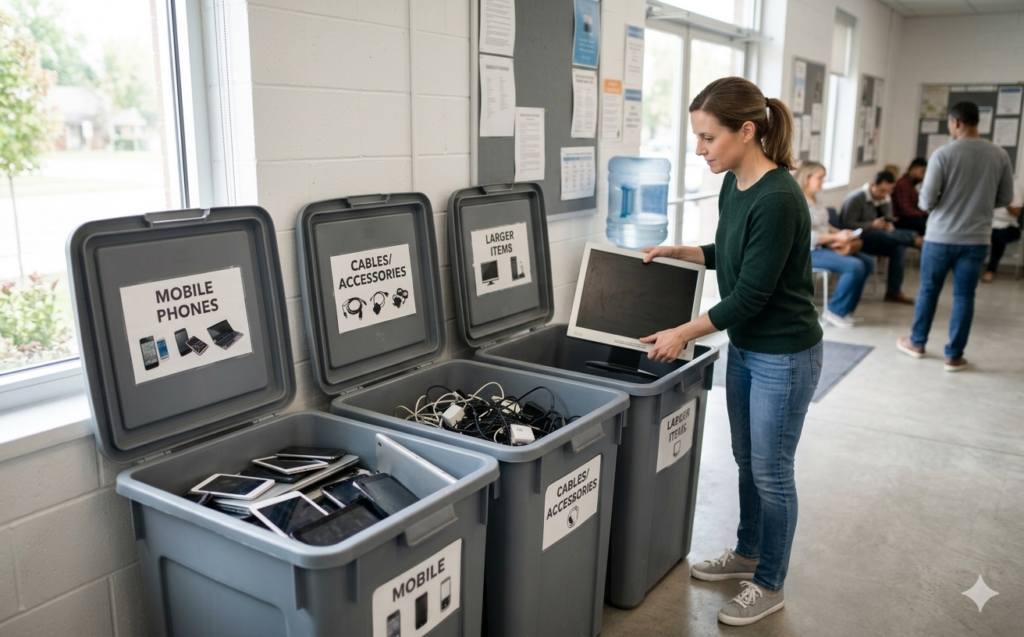
Your choices directly influence how materials are recovered and how much pollution is prevented. Take a few minutes to find a trusted recycling option for any unwanted electronics you still have. In most areas, drop-off points, take-back schemes, and council collections already exist.
Information in this article is based on current research, industry publications, and guidance from recognised environmental organisations. Readers should consult local regulations and certified recycling providers for location-specific advice.
Every device that gets formally recycled rather than binned reduces the load on communities already carrying too much. If you want to take that further, explore our other guides on environmental sustainability at Chaire-Cycledevie.