

Repair culture has returned to daily life. People now fix devices instead of replacing them at the first sign of damage. This change reflects a practical outlook and shows rising concern about cost and waste.
Yet, many still question why electronics fail soon after the warranty ends. This shared concern has pushed the idea of repair into wider discussion. i.e., the right to repair means you should be able to fix what you own. Phones, laptops, and kitchen appliances all fall under that umbrella.
That’s why access to tools, parts, and repair information is changing how the world handles e-waste.
At Chaire-Cycledevie Computers, we’ve been tracking these changes since 2001. This article covers how repair culture is growing and why planned obsolescence continues to fill our landfills. You’ll also learn what the circular economy has to do with all of it.
Read on to find out why so many countries now back this movement.
What Is Repair Culture and Why Should You Care?
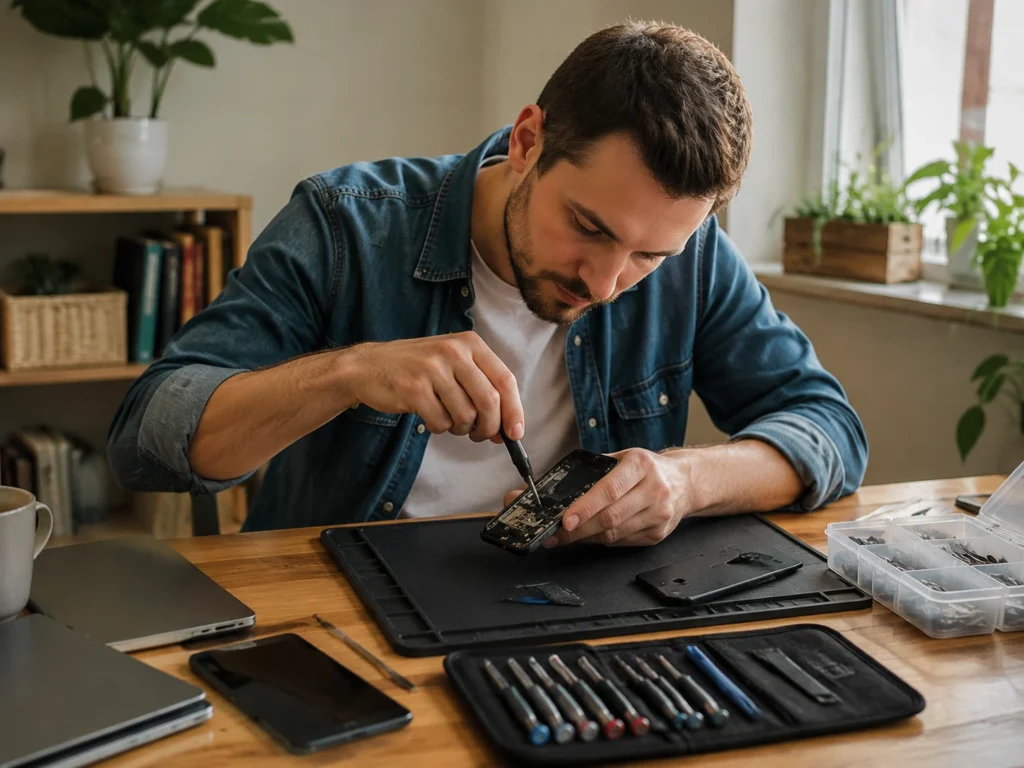
Repair culture is a growing movement where people choose to fix broken electronics.
You’ve probably got an old phone sitting in a drawer right now (even that cracked tablet you’ve been meaning to sort out). At the same time, a growing network of community repair cafés is expanding. YouTube teardown guides and independent repair shops across the UK and Europe also drive this shift forward.
People are tired of tossing out old items when a quick fix could save them money. For example, a screen repair costs under £50, while a new handset costs £800 or more.
That said, two big forces keep this throwaway cycle going.
1. Planned Obsolescence and the Throwaway Habit
Our research into device lifespans shows a clear pattern: most electronics fail due to small, replaceable parts. Small, replaceable parts wear out first, like batteries and charging ports. Swap those out, and many devices can last twice as long (and save you money).
A few tactics keep buyers in a constant cycle of purchasing new appliances and gadgets:
- Glued-In Parts and Proprietary Screws: Many phones and laptops arrive with batteries sealed inside the casing. So buyers who want a replacement often pay more for a professional repair than the component itself costs. Independent repair shops frequently can’t source the parts at all.
- Software Locks After a Set Period: Many companies push updates that slow down older smartphones and computers. The goal is a quicker path to the next purchase. Apple faced legal action in several countries over this practice.
- Spare Parts Kept from the Market: Original components stay locked to authorised service centres, out of reach for most independent technicians. This keeps repair costs high and pushes people toward new electronic equipment instead of repairable old ones.
Planned obsolescence keeps the e-waste cycle alive, and the environment pays the price each time a repairable gadget enters the waste stream.
2. How Electronic Waste Ties Into the Problem
E-waste dumped in landfills releases lead, mercury, and cadmium directly into the surrounding environment.
Waste electrical equipment left in landfill sites gradually leaks into local water supplies and nearby farmland. As exposure increases, these chemicals raise serious long-term health risks for surrounding communities.
Check these realities that show just how far this problem reaches:
- Toxic Materials in Each Device: Old electronics carry hazardous substances such as lead, mercury, cadmium, and brominated flame retardants. As casings break down, toxins leach into soil, contaminate dump sites, and spread into nearby farmland through water.
- A Global Recycling Shortfall: The Global E-Waste Monitor reports that formal collection and recycling accounted for 22.3% in 2022. In fact, facilities leave the majority of old items unprocessed, and valuable resources like copper and gold never get recovered. That figure shows how far current practices fall short.
- Communities Bearing the Heaviest Load: Across West Africa and South Asia, workers at informal dump sites face daily exposure to toxic fumes. Children in these areas show elevated lead levels in their blood, according to research from the World Health Organisation.
Every repairable phone or laptop that ends up discarded is a missed opportunity. People and the environment both pay for that choice. The damage doesn’t stay at the site. It spreads into nearby communities, affecting air, water, and daily life.
The Right to Repair Movement: What Changed?
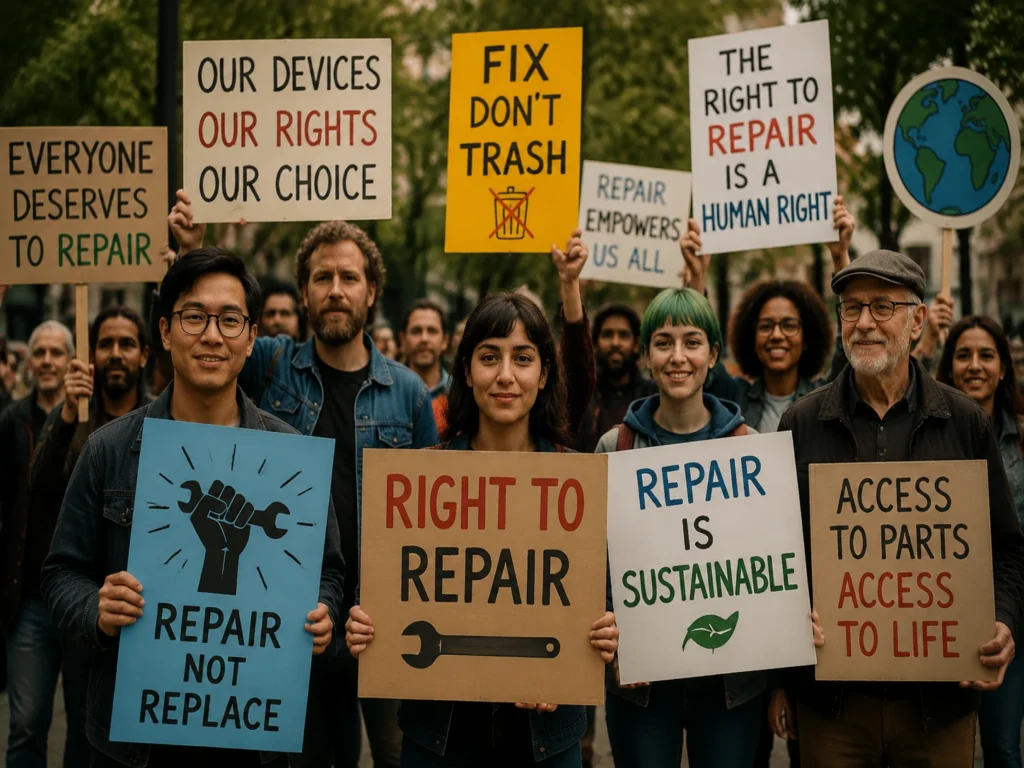
New laws in the EU and US now require manufacturers to provide spare parts and repair manuals to consumers.
We reviewed global repair policies and found that consumer pressure was the strongest driver behind these changes. The EU introduced right-to-repair rules covering smartphones, tablets, and household appliances in 2024 (three separate directives in three years). In the UK, independent repair shops and businesses welcomed the shift.
Even then, barriers remain for ordinary people. As mentioned before, many manufacturers still void warranties for third-party repairs. At the same time, spare parts for current equipment aren’t readily available on the open market either.
For instance, Apple and Samsung launched official self-repair programmes for phones and laptops, but access remains limited in many regions across Asia, Africa, and Latin America.
With that in mind, repair culture has moved well past a grassroots movement. Governments, businesses, and people around the world now see repair as a responsible choice.
In this context, sustainable technology focuses on using and maintaining devices in ways that reduce waste. When you extend a product’s life, it lowers environmental impact and keeps valuable resources in use longer.
Fixing Electronic Devices and the Circular Economy
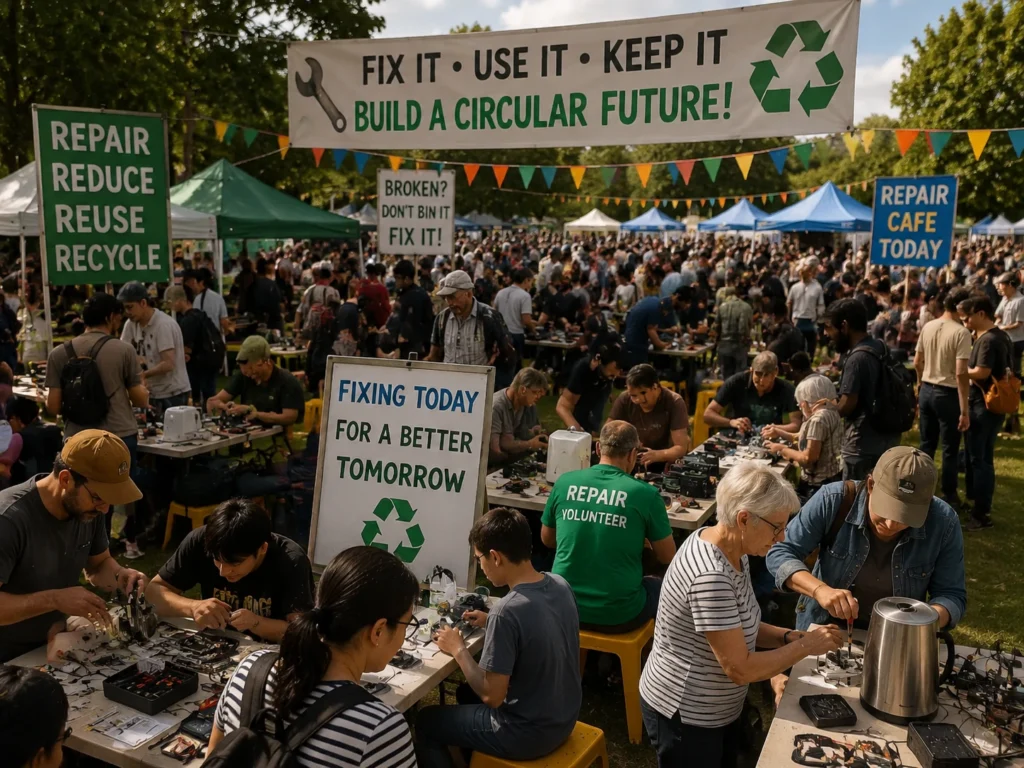
Every device you repair keeps valuable materials out of landfills for years.
As mentioned earlier, you can estimate how much money repairs save when you compare the repair cost with the price of a new device. For example, if a phone battery replacement costs $50 and a new phone costs $500, you save $450 by repairing it.
Three real-world examples show how this works.
- Metals That Stay in Circulation: Copper, cobalt, and lithium, already pulled from the earth, get a longer life through repair. The extraction of these materials carries a steep environmental cost, and each repair reduces that burden.
- A Circular Economy in Action: Fewer raw materials need mining when manufacturers commit to reuse and refurbishment. Countries like the Netherlands treat this as national policy, and businesses there meet reuse targets across appliances and electronics.
- Community Repair Projects Across Europe: Repair cafes in Paris, Amsterdam, and Berlin host public fix-it sessions. In the UK, these community groups have grown to hundreds of active locations nationwide.
This way, repair is feeding the circular economy one fixed device at a time. In turn, a single phone or laptop that gets a second life reduces pressure on natural resources. That’s a win for the environment and for a sustainable future, and the next step is closer.
Where Do We Go From Here?
Now that you know how repair culture works from your reading, the next step is easy and accessible.
Repair over replacement is one of the ways to cut your personal e-waste footprint. So support brands that offer spare parts and back local policies that protect the right to repair. Every purchase decision sends a signal to manufacturers about what people want from their electronics.
At Chaire-Cycledevie, we’ll continue to follow repair culture, new legislation, and the environmental impact of e-waste as this movement grows. More importantly, our mission is to give you the tools and education you need to make responsible choices about technology.
Visit us to explore more resources on tech lifecycles, recycling, and sustainable electronics.