
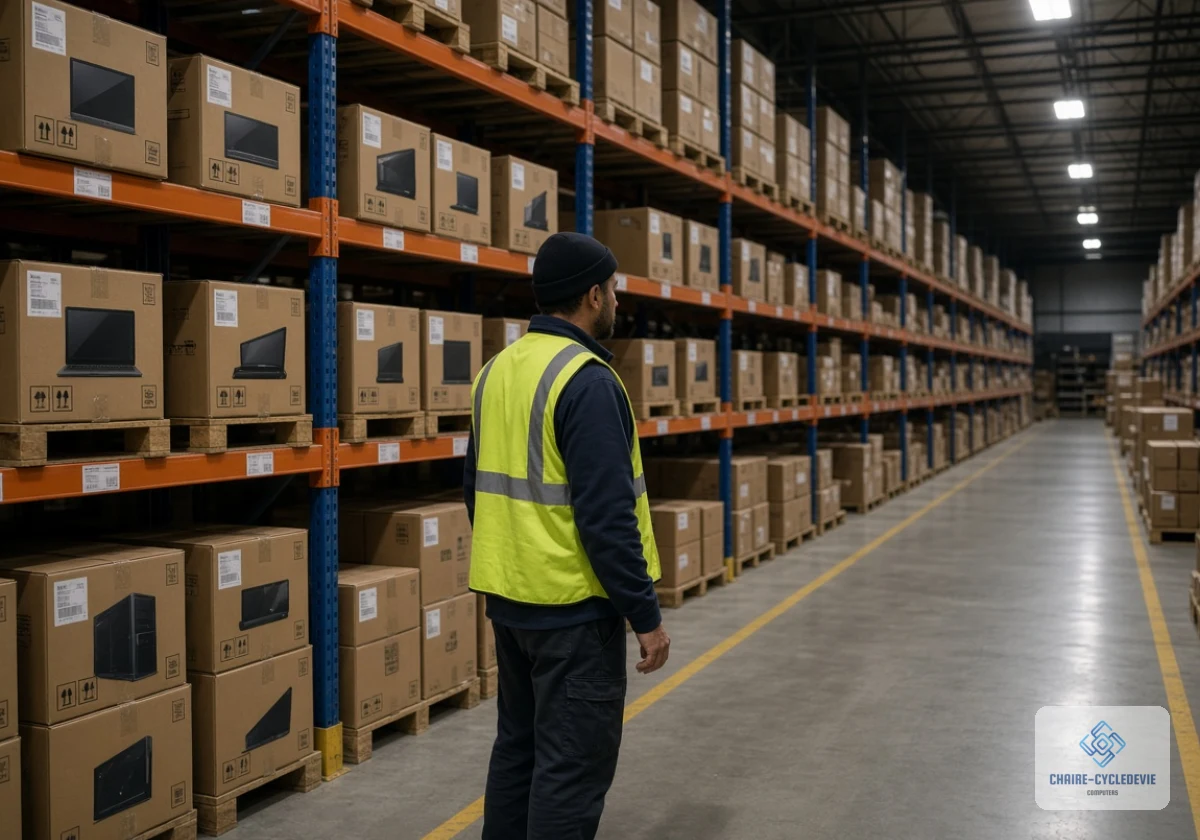
Almost none of us think much about the packaging around a computer. It’s just a box, some cardboard and a bit of plastic, right? You take out your new laptop, throw the packaging away, and get on with your day.
But all that packaging comes with environmental costs. We’ll break down the computer packaging environmental impact in detail and show you how manufacturers and buyers can reduce it.
Greenhouse Gas Emissions Contribute to Climate Change
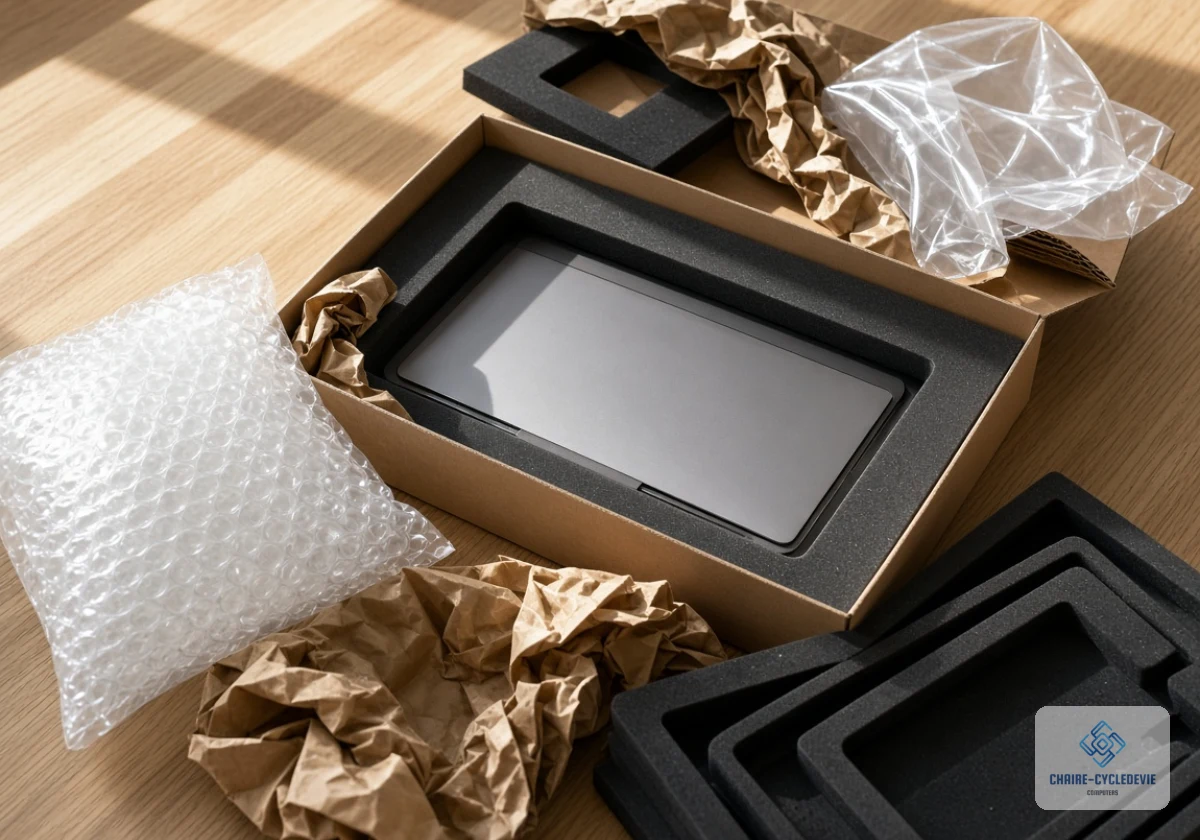
When you order a new laptop, it has to go through several stages before reaching your door. First, manufacturers produce its packaging using materials such as cardboard, plastic, and foam. This process requires energy to turn raw materials into boxes, protective inserts, and wrapping. Factories that rely on fossil fuels for energy release greenhouse gases into the atmosphere.
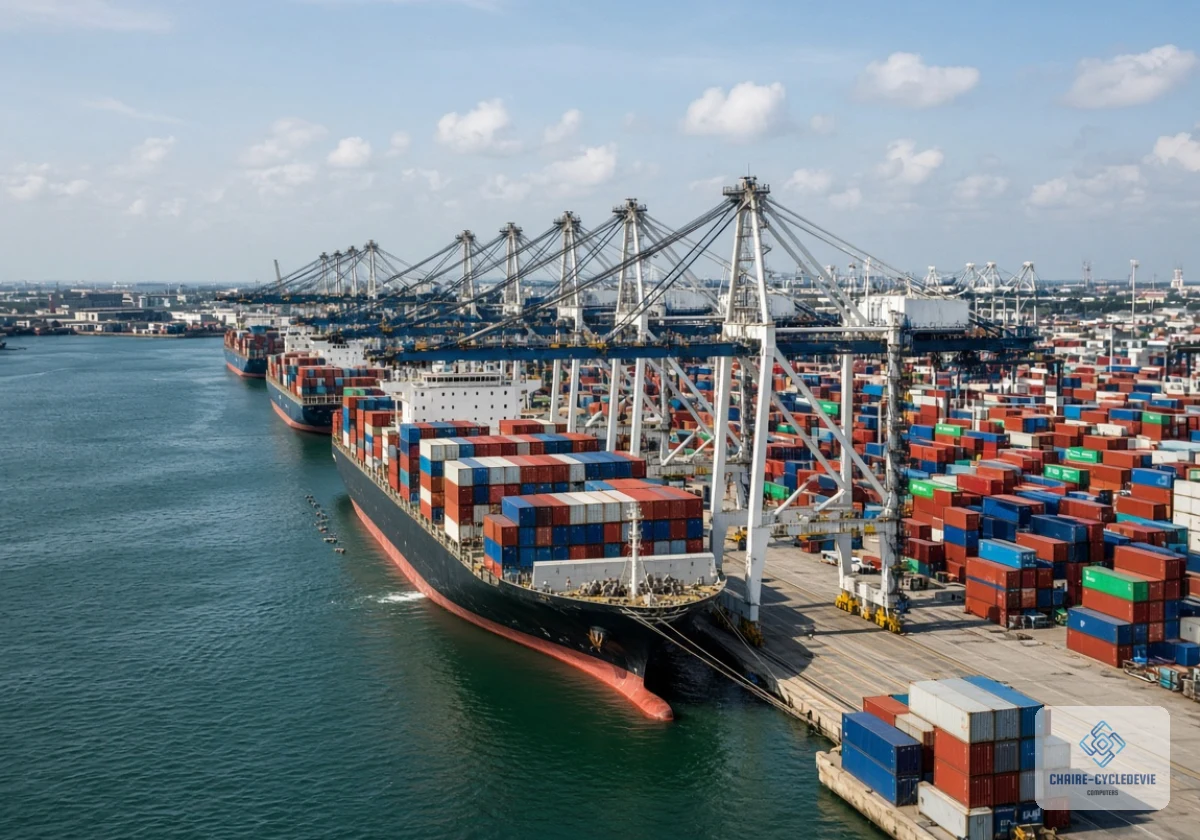
The computer then needs to travel from the factory to a warehouse, retailer, or directly to your home. These journeys often involve trucks, cargo ships or aircraft, all of which burn fuel and release more greenhouse gases. The farther the computer travels, the more opportunities there are for transportation emissions to add up.
The type of transport makes a difference, too. Air freight generally produces the highest emissions per tonne-kilometre, while sea freight usually produces much less for large international shipments. Rail can offer a lower-emission alternative to road transport on suitable routes.
Still, shipping isn’t necessarily the largest source of a computer’s environmental impact. The OECD reports that transport accounts for less than 5% of a computer’s total life-cycle greenhouse gas emissions in many assessments. Manufacturing and operation generally contribute much larger shares.
Raw Material Consumption and Resource Depletion
Think about what’s left after you unpack a new computer. The cardboard box, plastic wrapping, and foam inserts might all go straight into the bin. But making those materials requires natural resources, and extracting them can put pressure on the environment.
Take the cardboard box, for example. Manufacturers need wood pulp to produce it, which means using trees and processing the wood into paper. When forests are cleared or harvested faster than they can regenerate, it can lead to habitat loss, soil erosion, and reduced biodiversity.
Plastic packaging has its own environmental cost. Most conventional plastics are made from oil and natural gas, both of which are finite fossil fuel resources. Extracting these fuels requires drilling and other industrial activities that can disturb land and ecosystems.
Packaging Production Consumes Freshwater
Sometimes, when we tell readers how much water goes into making a cardboard box, they’re surprised. It’s a natural reaction. After all, it looks like a fairly simple product. But producing the paper and cardboard used in computer packaging takes water at several stages. Mills use it to turn wood pulp into paper, clean fibres, and keep production equipment running.
Plastic packaging also has a water footprint. Producing conventional plastics involves processing oil and natural gas, refining them into chemical feedstocks and manufacturing the finished plastic. These industrial processes use water for cooling, cleaning and production.
The amount of water used depends on the material, the manufacturing process and the factory itself. Paper production can place particular pressure on local water supplies, especially where mills operate in areas that already face water shortages. Wastewater from these facilities can also affect nearby rivers and other water sources if it isn’t properly treated.
So the environmental cost isn’t limited to the materials left behind after unboxing. Water has already been used to produce much of the packaging before the computer reaches your home.
Packaging Manufacturing Causes Air and Water Pollution
Making paper and plastic packaging doesn’t just consume resources. The manufacturing processes can release pollutants into the air and water, too.
Take cardboard production. Turning wood into paper involves pulping, cleaning, and sometimes bleaching the fibres. These processes produce wastewater containing organic matter, suspended solids, and chemicals used during production. If mills don’t treat this wastewater properly, pollutants can enter nearby rivers and other waterways, affecting aquatic life.
Paper and cardboard production can affect air quality as well. The processes involved in pulping, drying, burning fuel, and finishing can release pollutants.
Plastic packaging creates similar concerns, although the pollutants differ. Its production can release volatile organic compounds (VOCs) and fine particles during heating and processing. Some of these pollutants contribute to smog and poor air quality, while others can irritate the eyes and respiratory system or pose wider health risks.
Packaging Waste and Plastic Pollution
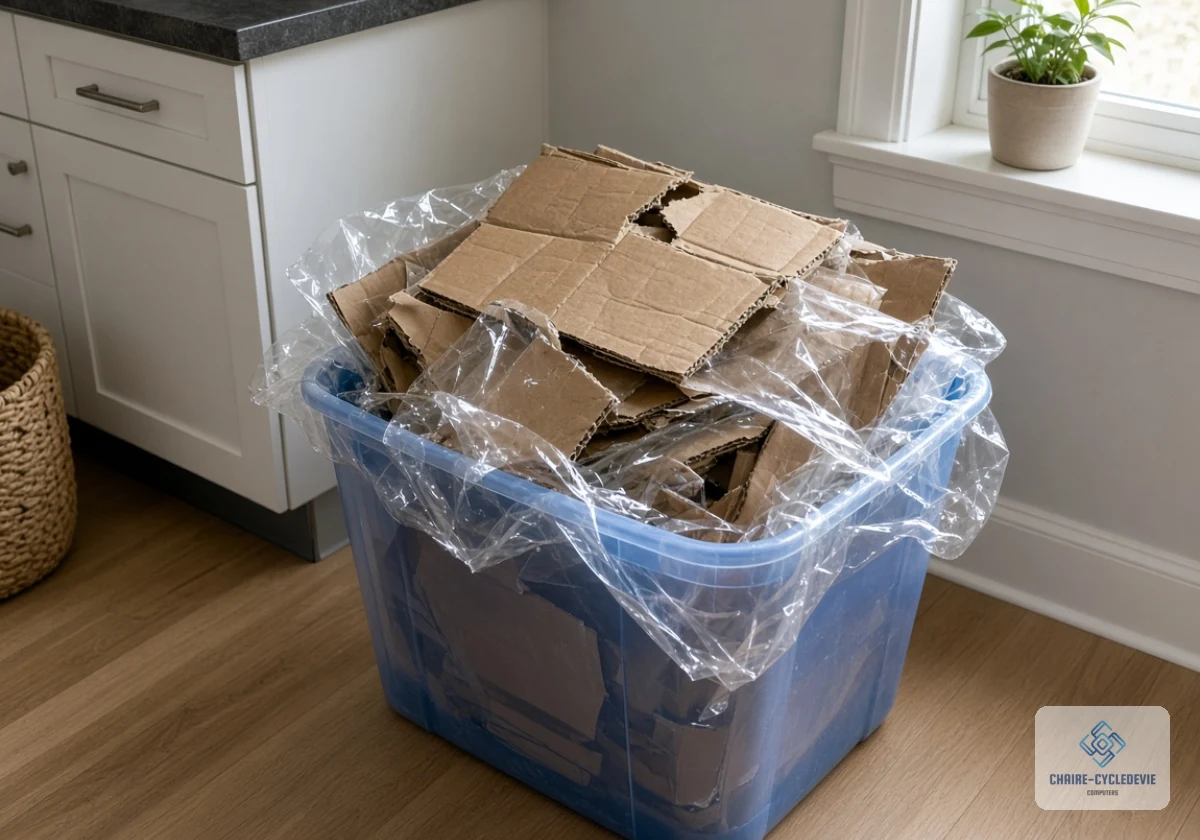
Once you take a new computer out of its box, most of the packaging has served its purpose. You might keep the box for a while, but cardboard inserts, plastic sleeves, foam, and protective films often end up in the bin. Multiply that by the millions of computers sold each year, and the amount of packaging waste becomes substantial.
However, not all packaging is easy to recycle. Boxes with plastic coatings, certain adhesives, or mixed materials can be harder to process. Contamination from dirt, grease and other waste can make cardboard unsuitable for recycling, too.
Plastic packaging presents another problem. Manufacturers use different plastics, which need separate sorting and processing. Some local recycling programmes don’t accept these materials, so they end up in general waste instead.
Councils send much unrecycled packaging to landfill or incinerators. Plastic waste causes further problems when it escapes these disposal systems and enters the environment. It can persist for many years, gradually breaking into smaller fragments, including microplastics, through exposure to sunlight, weather, and physical wear. These particles can spread through soil, rivers, and oceans, where they’re difficult to remove.
How to Reduce the Environmental Cost of Computer Packaging and Shipping
The environmental costs we’ve covered don’t mean computers have to arrive with layers of unnecessary packaging or travel through the most polluting transport routes. Manufacturers can change how they package and ship products, while buyers can make more considered purchasing and delivery decisions.
So, what can each of us do to reduce that impact? There are a few practical ways to start.
Use Less Packaging Without Compromising Protection
A computer needs enough protection to survive handling and delivery, but that doesn’t mean every product needs multiple layers of wrapping. Manufacturers can design boxes around the actual size of the computer, remove unnecessary inserts, and avoid adding protective materials that serve little purpose.
Smaller, lighter packaging also takes up less space in delivery vehicles. That means transport companies can carry more products in each shipment, potentially reducing the number of journeys needed.
Choose Recycled and Recyclable Materials
Manufacturers can reduce demand for virgin resources by using recycled cardboard and other recycled materials where suitable. They can also avoid unnecessary plastic coatings, laminates and mixed-material components that make packaging harder to recycle.
The material still needs to protect the computer during delivery, though. A packaging choice that looks more environmentally friendly isn’t necessarily better if it requires more material or leads to damaged products and replacements.
Choose Lower-Emission Shipping Methods
Shipping by air is generally more emissions-intensive than moving the same amount of cargo by sea. Manufacturers can reduce transport emissions by using sea freight for shipments that don’t need urgent delivery and planning routes to avoid unnecessary journeys.
Buyers can also choose standard delivery instead of express shipping when they don’t need the computer immediately. That gives retailers and delivery companies more flexibility to organise shipments.
Reuse or Recycle Packaging After Unboxing
You don’t have to throw away every part of a computer’s packaging immediately. Keep the original box and protective inserts if you might need to move, store, or return the computer. They can also help protect it if you sell or give it to someone else later.
For packaging you no longer need, separate cardboard, plastic, and other materials according to your local recycling rules. Some collection services accept cardboard but not plastic films or foam, so check your local recycling rules before sorting the packaging.
Smaller Boxes, Slower Ships, Lower Impact
The next time you buy a computer, don’t overlook the box it arrives in. A little more attention to its packaging and delivery can help reduce the waste and emissions associated with getting that device to your door.
If you have questions about the environmental impact of computers or want to learn more about their life cycle, reach out to Chaire-Cycledevie. We’re here to help you make more informed and responsible technology choices.