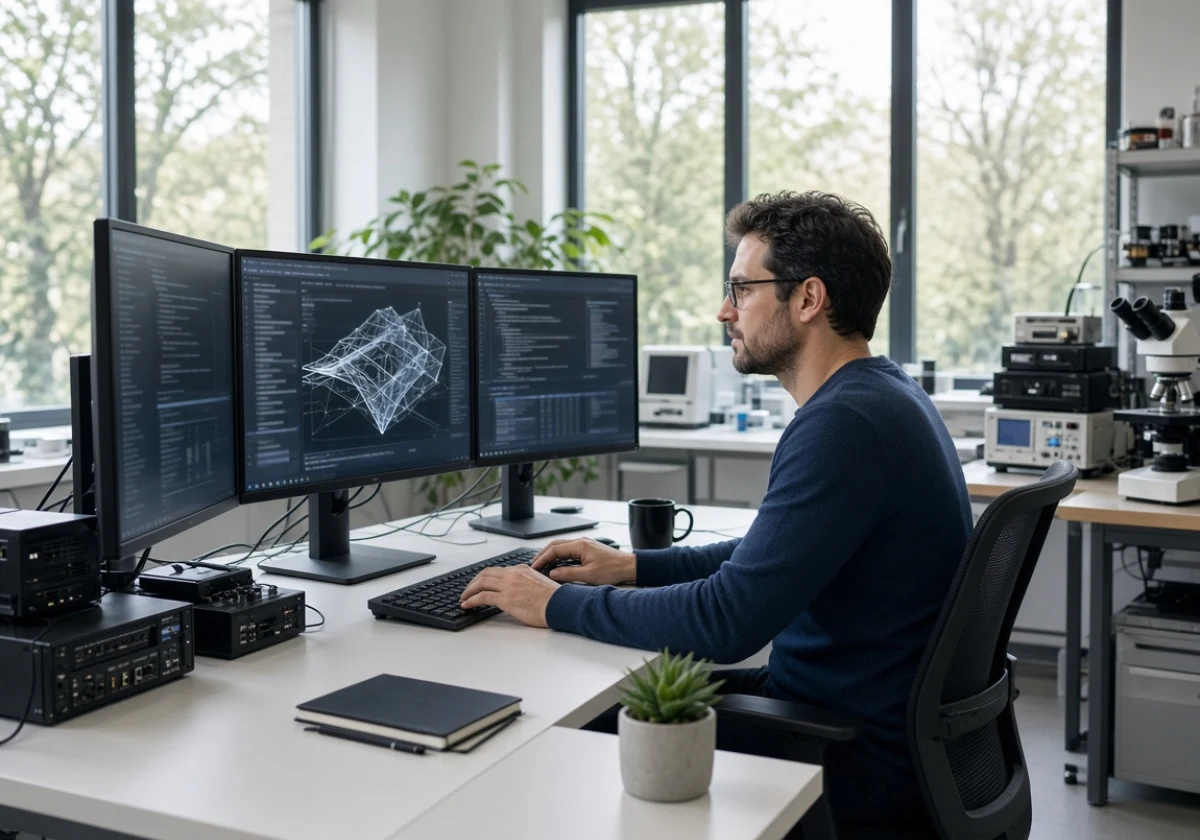
Future computers will fade into the background. They’ll respond to your speech, your gestures and the task you’re already doing. Instead of learning menus and buttons, you’ll use machines that adapt to you.
Every one of those changes still runs on physical hardware that someone has to mine, build and recycle. At Chaire-Cycledevie, we study the environmental lifecycle of technology. We follow each computer from raw materials to final disposal.
The future of technology starts with quantum and AI work already running in labs. From there, it moves into everyday life through voice, wearables and ambient screens. Along the way, you’ll see why greener hardware costs less to run and how today’s machines compare with what comes next.
The Future of Computers Is Arriving Faster Than Most People Expect
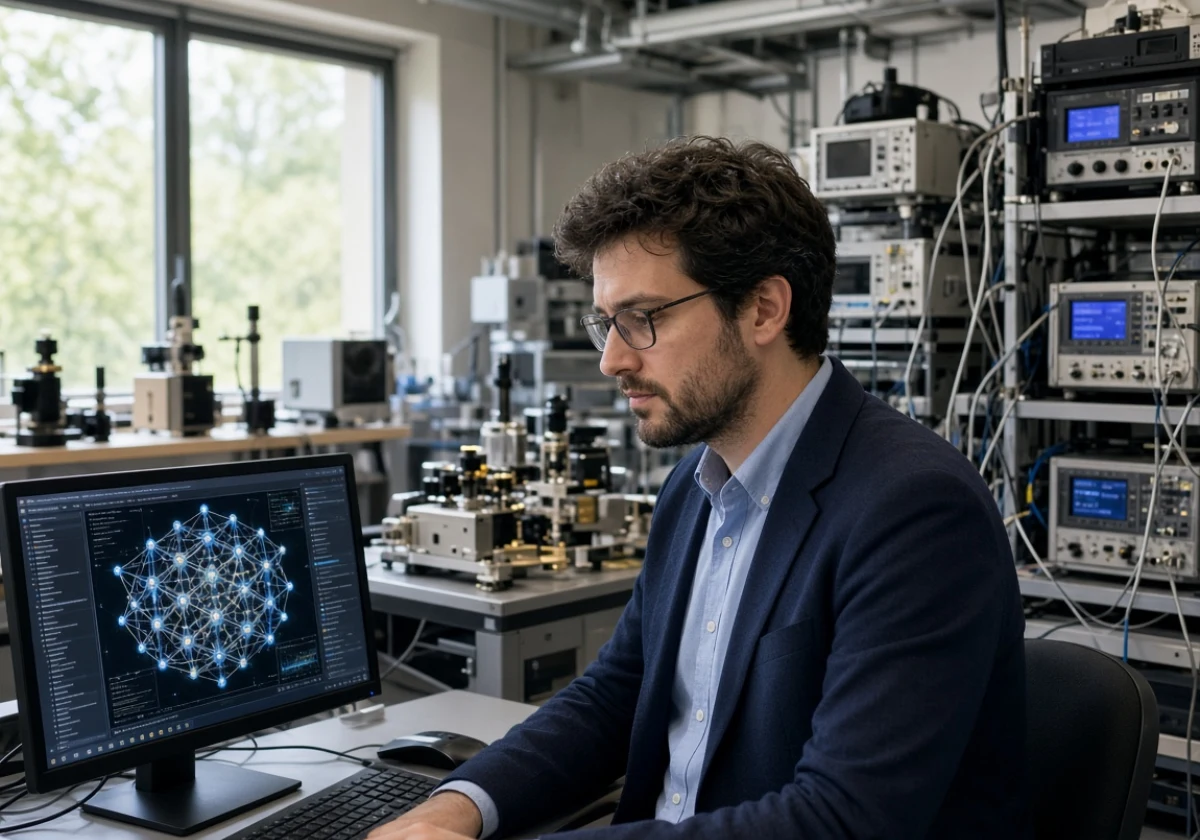
Many technological advancements driving the future of computers already run in computer science labs. For decades, Moore’s Law set the pace, as chipmakers doubled the transistors on a chip roughly every two years. That doubling has slowed, and engineers now look to new designs instead of ever-smaller parts.
Two shifts lead that work: quantum machines and AI built into everyday devices.
Quantum Computing Steps Out of the Research Lab
Quantum computing replaces the bits in classical computers with quantum bits, or qubits. A normal bit holds either 0 or 1, while a qubit can hold a mix of both at once. Scientists call this superposition. It could one day let quantum algorithms solve certain complex problems, such as modelling molecules for new medicines, far faster than traditional computers.
UK funding now backs that potential with working hardware. According to UKRI’s 2024 announcement, £30 million funded seven quantum computing testbeds at the National Quantum Computing Centre in Oxfordshire.
Most people won’t own one of these machines, though. These machines will likely operate in data centres, where users can access their processing power through cloud services. Your phone already stores photos on remote servers the same way.
AI and Machine Learning Built Into Everyday Devices
AI has moved from the cloud onto the chips inside computers and smartphones. Your phone may already transcribe speech without an internet connection, thanks to machine learning models running directly on its hardware.
Running AI on your own device can reduce the amount of personal data sent to remote servers. Although developers often train these models using large datasets, some trained models process your requests directly on your phone.
Expect these artificial intelligence features to work in the background. Chipmakers now add dedicated AI chips and design the hardware and software together. That pairing gives each feature the processing power it needs, and tasks like transcription finish without a wait (you’ll only notice the good ones when they stop working).
What Will Computing Look Like in Daily Life?
Beyond the lab, computing in daily life will move away from keyboards and mice towards voice, wearables and ambient devices. UK Research and Innovation funds research into pervasive and ubiquitous computing. This field puts sensors and chips inside everyday objects, from thermostats to doorbells. Connected objects like these form the Internet of Things, and edge computing lets them process data on site.
Here are three changes you’ll likely notice at home before they make the news.
- Voice and Gesture Input: Speaking will replace typing for quick jobs like setting timers or sending short messages. A wake word is faster than unlocking a phone and opening an app. Keyboards and other input devices will still handle long writing in professional settings. Try voice first for reminders and quick searches.
- Wearables That Read Context: Wearables will use sensors to read what you’re doing, such as walking, sleeping or exercising. Many smartwatches can already detect a workout and start tracking it on their own. Other IoT devices will follow, like lights that switch off when you leave a room. Before you buy, check which sensors a wearable has and what data it shares.
- Ambient Screens and Surfaces: Displays will spread into mirrors, fridges and car dashboards. Augmented reality and virtual reality headsets, along with smart glasses, will move the screen in front of your eyes. Most of these devices still rely on apps, so judge each one by how often you’d use it.
Choose devices based on how often you’ll use their features, rather than how impressive they look in demonstrations. Voice already saves time on small jobs, while ambient screens still need a clear reason to exist.

Sustainable Computing: Green Innovation for Tomorrow’s Technology
Sustainable computing usually costs less to run, and the savings start with heat. If you’ve ever felt a laptop warm up on your lap, you’ve felt wasted energy. A chip that draws less power also runs cooler. You save twice: once on the chip’s own electricity and again on cooling.
The savings grow at data centre scale. Servers and data storage give off constant heat, and removing it drives up energy consumption. That’s why operators build data centres in cold climates or near cheap renewable power. Cold air cuts the cooling load, while renewable power cuts the emissions from what’s left.
Green innovation starts long before a computer reaches your desk. Our lifecycle research points to a simple habit: keep each device in use for longer. Manufacturing accounts for a large share of a computer’s lifetime emissions, so every extra year of use spreads that cost further. Good computer design makes this easier, with screws instead of glue and parts you can swap.
In many cases, the greener move is an upgrade, such as more memory or a new battery. A clean software install can also make an older laptop feel faster. Some repairers now use 3D printing to replace broken hinges or casing clips.
Comparing Today’s Computers With the Machines of the Near Future
The next decade could change how people use personal computers, even if familiar devices remain common. Most changes will affect how you interact with them rather than the devices themselves.
The table below compares today’s computers with the changes we may see over the next decade.
| Feature | Today’s Computers | Near future |
|---|---|---|
| Main input | Keyboard and mouse | Voice and gesture, with keyboards for long work |
| Hard maths | Classical computers | Classical computers plus cloud-based quantum machines |
| Upgrades | Often limited by glued parts | More repairable options with replaceable parts |
None of this will replace your PC overnight. Our lifecycle research shows that personal computing changes at the pace people replace their devices. New computer technology from labs often takes years to reach most homes. So when you shop, look first at the parts you’ll touch every day: the screen, keyboard and battery.
Get Ready for the Next Era of Computing
New computing technology may offer greater convenience, but every upgrade deserves a closer look before you spend your money. Consider how often you’ll use its features and how long the device will last.
For now, keep your current machine running as long as it meets your needs. When it’s time to replace it, choose a device you can maintain and repair.
Chaire-Cycledevie publishes research that follows computers from factory to recycling centre. Contact us if you’d like help reading a device’s environmental footprint before you buy. Ready to choose a computer that lasts longer? Talk to Chaire-Cycledevie today.